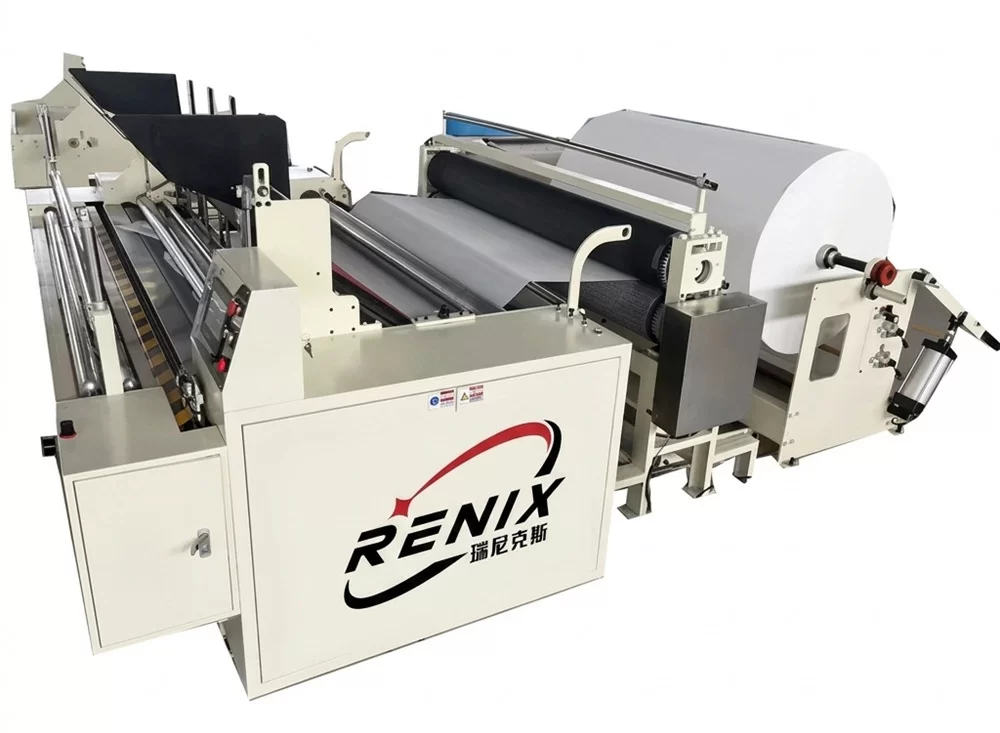
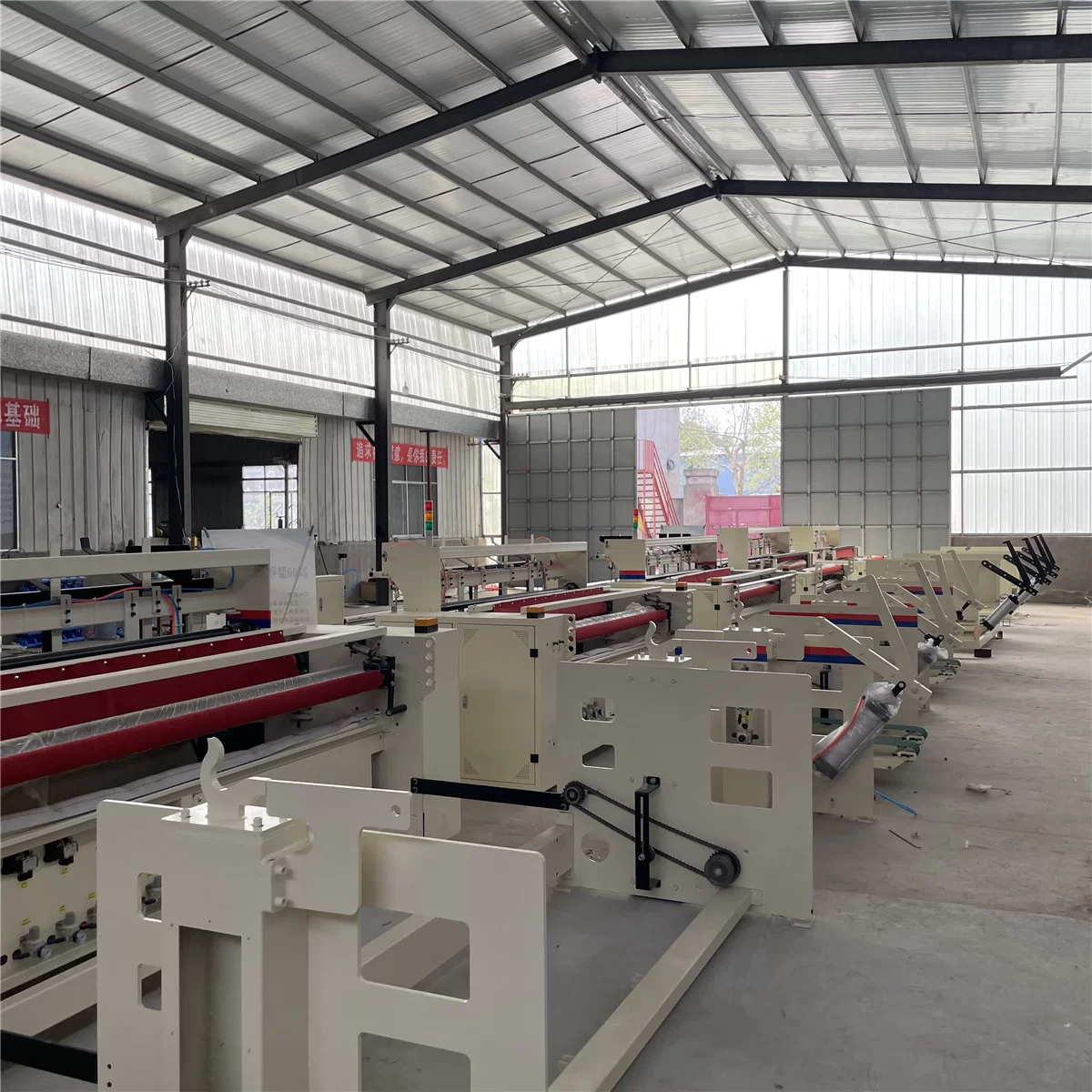
A toilet paper rewinding machine recently entered the assembly inspection stage at the Renix factory. This inspection takes place before raw material is loaded and before the machine proceeds to a complete trial operation.
The purpose of the assembly inspection is to verify that the main mechanical, pneumatic and electrical components have been installed according to the confirmed configuration. It also provides an opportunity to identify issues that are easier to correct before continuous operation begins.
Checking the Main Machine Structure
The inspection starts with the machine frame and the installation positions of major components. The assembly team checks the unwind section, paper-guiding rollers, embossing section, perforation unit, rewinding section and log discharge area.
Roller alignment is particularly important because the paper web passes through several operating sections before it is rewound into a finished log. Incorrect roller positions may affect paper tracking, tension stability or the appearance of the finished roll.
Fasteners, bearings, supports and adjustment mechanisms are also reviewed. Components that require regular operator adjustment should remain accessible after the machine is installed.
Transmission and Movement Inspection
Chains, belts, gears, bearings and drive components are checked before the machine is tested with paper. Individual transmission sections are operated to confirm movement direction and mechanical clearance.
At this stage, the team listens for unusual mechanical contact and observes whether moving components operate smoothly. Guards and protective covers are also checked to ensure that the relevant moving areas are properly enclosed.
The assembly inspection does not attempt to determine practical production output. Actual performance depends on the raw material, finished-roll specifications, operating settings and supporting equipment. The immediate objective is to confirm that the machine is mechanically ready for further testing.
Pneumatic Components and Connections
Depending on the machine configuration, pneumatic components may be used for clamping, cutting, paper-core handling, log discharge or other movements.
Pneumatic tubes, connectors, cylinders and valves are inspected for correct installation. Air pressure requirements and movement sequences are then checked during individual operation.
A small air leak or an incorrectly adjusted cylinder may not be obvious during static inspection. For this reason, pneumatic functions are observed repeatedly before the machine progresses to a complete operating cycle.
Sensors and Electrical Controls
The electrical inspection covers the control cabinet, operating panel, motor connections, sensors, emergency stops and selected safety functions.
Sensors are checked for mounting position and response. A sensor must detect the intended material or machine position consistently without interfering with the production process.
The assembly team also confirms that individual motors and controlled movements respond to the correct operating commands. Emergency-stop devices are tested before a continuous cycle is permitted.
Preparation for Material Testing
After the basic assembly inspection is complete, the machine can proceed to an unloaded operating test and then to a material trial using suitable jumbo tissue paper.
The material test will focus on paper feeding, web alignment, embossing, perforation, rewinding and log discharge. Finished-product dimensions and appearance must be reviewed according to the specifications used for the test.
An assembly inspection therefore cannot replace a material trial. The two stages serve different purposes: assembly inspection confirms installation and movement, while the material trial evaluates how the machine handles actual paper.
Customers preparing to purchase a toilet paper rewinding machine should provide the jumbo roll width, paper specifications, finished-roll diameter, sheet length, embossing requirements and paper-core dimensions. The intended cutting and packing method should also be explained if the rewinder will be connected to downstream equipment.
Published by
Zhengzhou Renix Machinery Co., Ltd.
This update is prepared from company production, inspection, testing or delivery records. Equipment details should be read together with the confirmed project configuration.
Copyright © Zhengzhou Renix Machinery Co., Ltd.. Original text and photographs may not be reproduced for commercial use without written permission. Quotations must identify the source and link to the original page.