
Function, configuration and line compatibility
Review how the machine works, what it can produce and which optional functions or supporting equipment may be needed for the complete process.
Machine overview and suitable production use
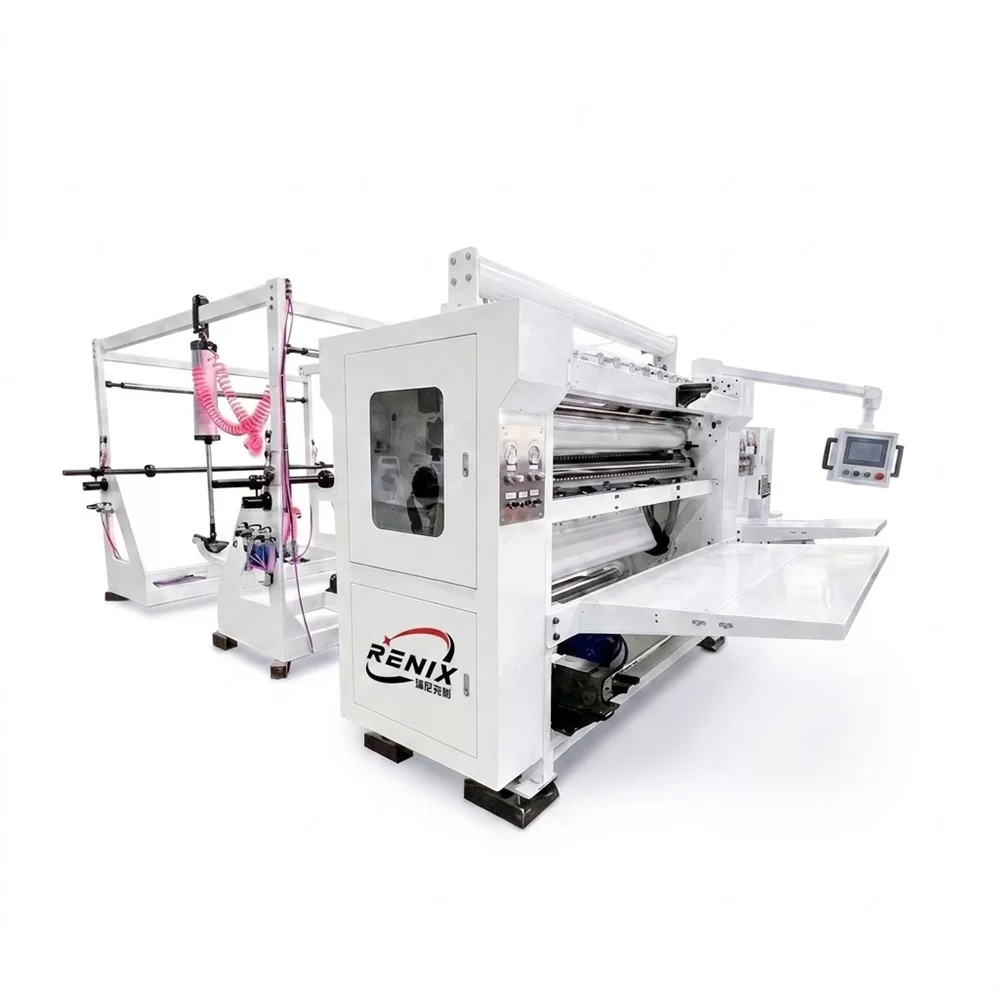
Automatic Facial Tissue Soft Pack Wrapping Machine
The Automatic Facial Tissue Soft Pack Wrapping Machine packages pre-cut facial tissue stacks in heat-sealable film. It is used after the facial tissue folding and log-cutting stages to form individual retail soft packs with controlled feeding, film wrapping, edge folding, sealing and finished-pack discharge.
This equipment is a primary packaging machine. It does not produce interfolded tissue logs and does not replace the upstream folding machine or rotary cutter. A secondary bundling or case-packing machine is required when several individual packs must be combined for transport or wholesale distribution.
Suitable Products
V-fold soft-pack facial tissues
Interfolded facial tissue stacks
Two-ply and three-ply facial tissue packs
Printed-film and unprinted-film packs within the confirmed range
Working Process
Pre-cut tissue stacks enter the infeed section at the required spacing and orientation. Packaging film is fed and registered, the stack is wrapped, the edges are folded, and the sealing system closes the pack. The finished pack is discharged for inspection, coding, bundling or carton packing.
Packaging Material and Product Confirmation
Pack length, width, height, film width, film thickness, heat-sealing characteristics and printed registration marks must be confirmed before manufacture. Practical output depends on pack dimensions, tissue-stack stability, film quality, sealing time, product-transfer stability and changeover frequency.
Information Required Before Configuration
Finished tissue-pack length, width and height
Sheets per pack and number of plies
Film material, thickness and roll dimensions
Printed registration or plain-film requirement
Required packs per minute
Upstream cutter discharge direction and height
Date-coding requirement
Secondary bundling or case-packing requirement
Destination voltage and compressed-air conditions
Equipment Boundary
This page describes an individual soft-pack wrapping machine. Facial tissue folding, log cutting, product accumulation, secondary bundling, carton packing and warehouse transfer are separate processes unless included in the confirmed equipment scope.
Upstream Connection
The wrapper receives cut tissue stacks from a facial tissue log saw and completes primary soft-pack forming and sealing. Stack dimensions, feeding direction and packaging-film specifications must be confirmed together.
How the machine processes the material
Pre-cut facial tissue stacks are positioned by the infeed system. Heat-sealable film is fed around each stack, after which the machine folds the film edges and completes sealing. The finished packs are discharged in a controlled direction for inspection or connection to downstream bundling and case-packing equipment.
Machine data for configuration review
Machine type | Automatic facial tissue soft pack wrapping machine |
Applicable product | Pre-cut interfolded facial tissue stacks |
Packaging method | Film wrapping, edge folding and heat sealing |
Packaging range | Confirmed according to the finished tissue pack |
Design speed | Confirmed according to pack size and film |
Installed power | Confirmed in the technical agreement |
Packaging material | Compatible heat-sealable film after sample confirmation |
Dimensions | Confirmed after final configuration |
Functions available by requirement
Date coder
Alternative infeed direction
Pack accumulation conveyor
Automatic rejection
Connection to secondary bundling
Machines used before or after this process
Automatic rotary tissue log saw
Product transfer conveyor
Facial tissue bundling machine
Case packing and carton sealing equipment
Design speed and reference output are not the same value. Practical production depends on raw material, finished-product dimensions, machine configuration, operator preparation and the capacity of connected equipment.