
EN RU
Discuss Your Project Request a configuration
TISSUE PRODUCT APPLICATIONS

applications

Learn the raw materials, process steps, required equipment, quality checks and packing choices for major tissue product applications.

CHOOSE THE PRODUCT TO BE MADE

Open the application that matches the intended finished product

Each path explains the product use, material basis, converting route, suitable equipment, packaging format and quality requirements.

FEATURED APPLICATION GUIDES

Compare product requirements before opening an equipment category

The summaries below use the application fields already maintained in the guide pages: application requirements and suitable equipment.

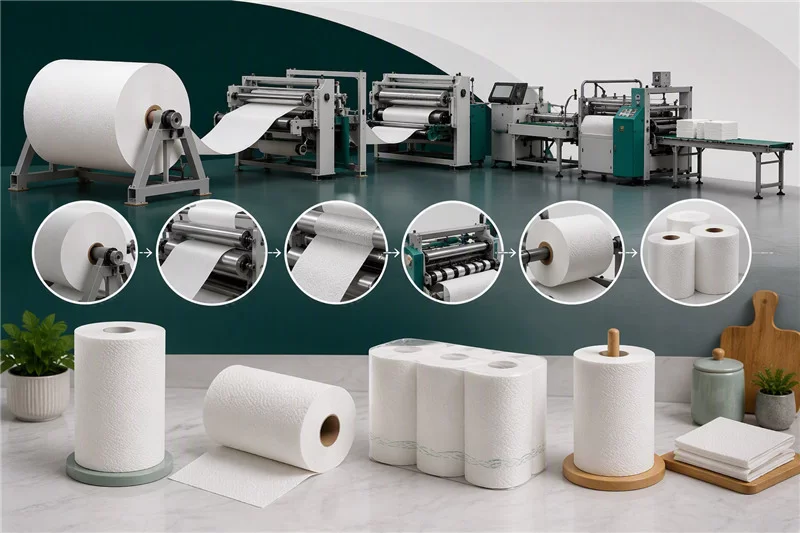
Disposable Cleaning Wipe Applications for Workshops and ManufacturingAPPLICATION 01

Disposable Cleaning Wipe Applications for Workshops and Manufacturing

Explore disposable cleaning wipe materials, converting processes, equipment options, packaging forma

APPLICATION REQUIREMENTS

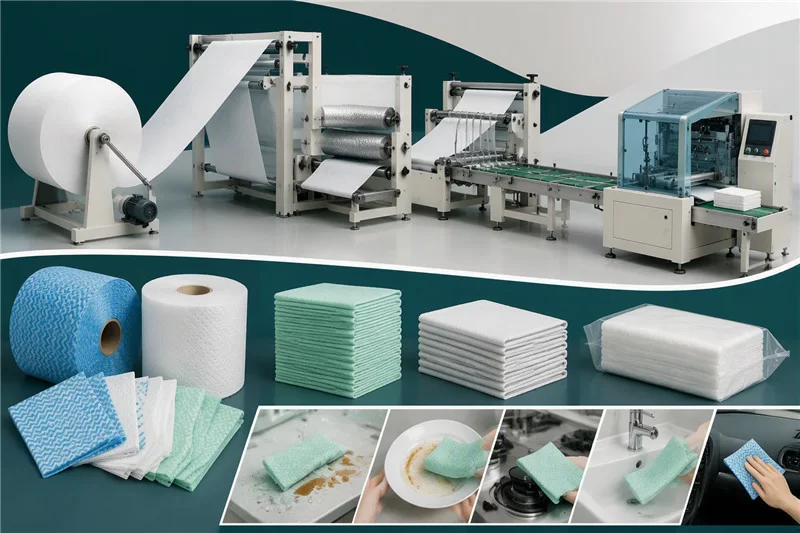
Disposable cleaning wipes are used to remove water, oil, dust, production residue and general contamination from tools, machinery, worktables and manufacturing areas. The finished product may be supplied as a perforated roll, center-pull roll, folded stack, individual sheet or dispenser refill. Product selection should consider liquid absorption, wet strength, abrasion resistance, lint generation, sheet dimensions, dispensing method and compatibility with the intended cleaning liquid. The required wipe should be defined according to the actual cleaning task rather than selected by material name alone.
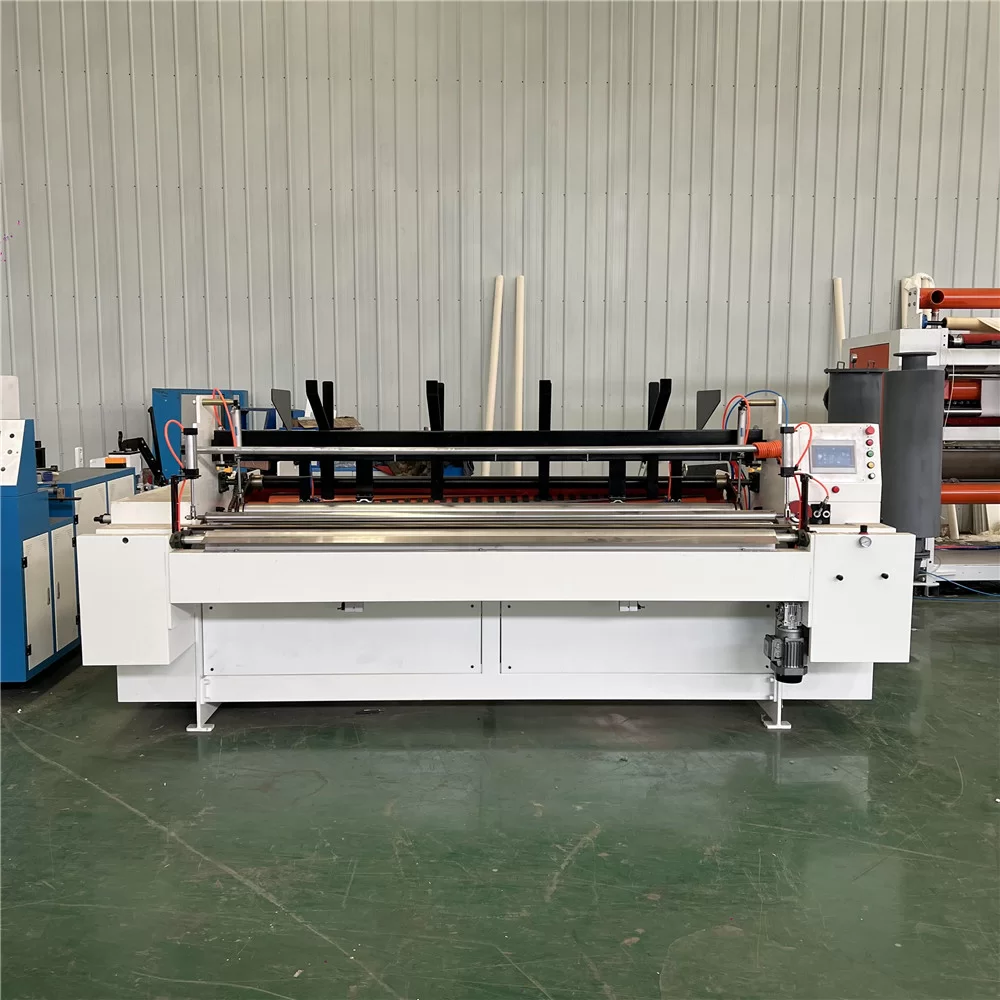
SUITABLE EQUIPMENT

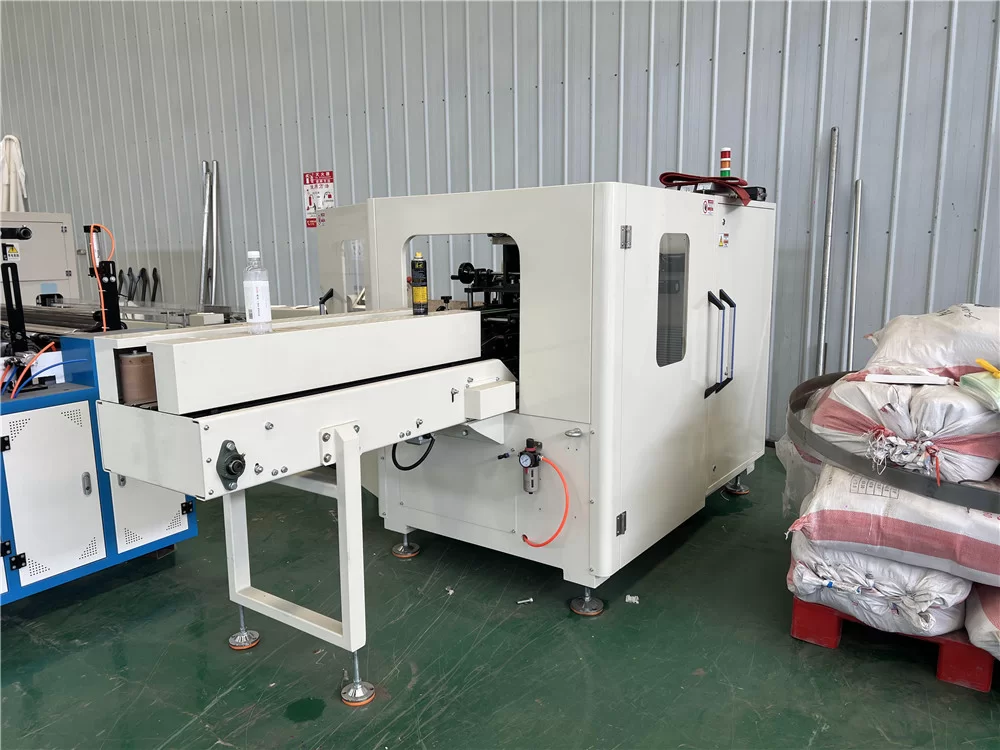
Suitable equipment may include an industrial wiping roll rewinder, embossing and perforating units, log cutting equipment, nonwoven slitting and folding machines, cross-cutting systems, automatic counting equipment and suitable bag, film or carton packing machinery. The machine configuration should be selected according to the material width, basis weight, thickness, tensile strength, finished-roll diameter, sheet dimensions and target output. Tissue paper, airlaid material and spunlace nonwoven may require different tension control, cutting structures and feeding arrangements, so one fixed machine should not be assumed to process every substrate effectively.

Read application guide →
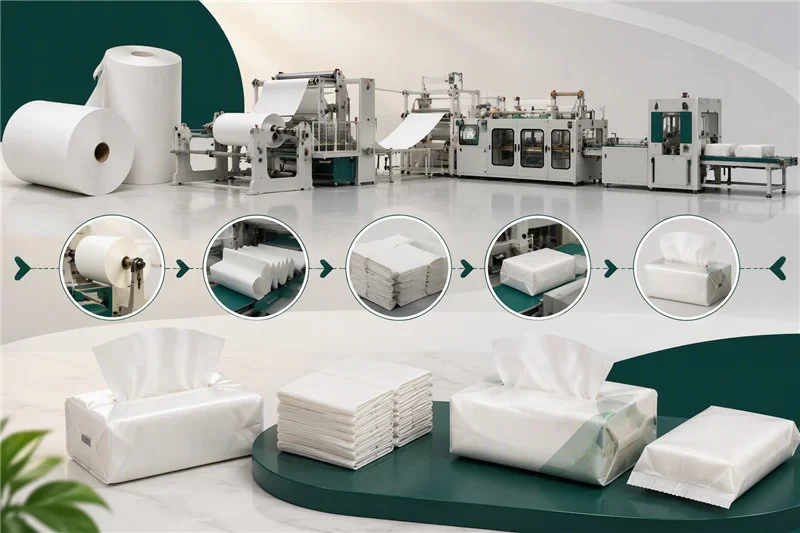
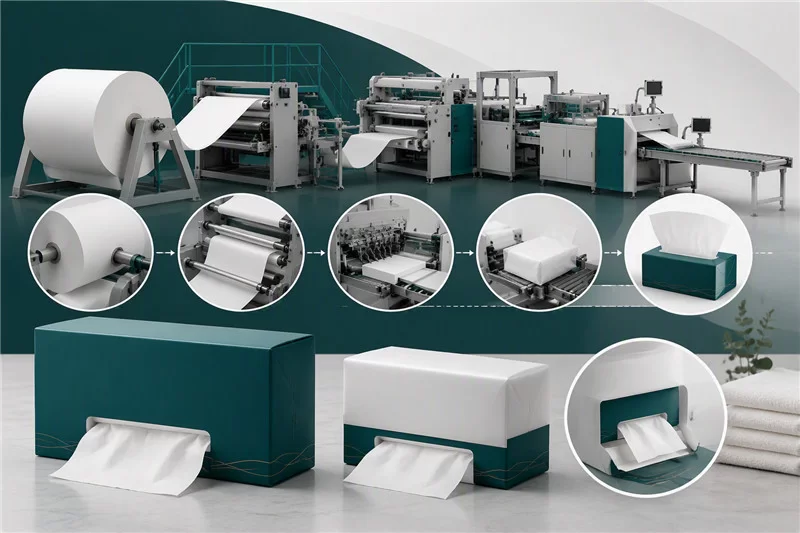
Paper Napkin Applications for Restaurants and Food ServiceAPPLICATION 02

Paper Napkin Applications for Restaurants and Food Service

Explore restaurant napkin requirements, paper selection, printing and folding processes, suitable ma

APPLICATION REQUIREMENTS

Restaurant napkins should match the dining format, tabletop presentation, dispenser or serving method and expected daily consumption. Important requirements include unfolded and folded dimensions, number of plies, paper basis weight, fold style, embossing, printing, sheets per pack and finished stack appearance. Table napkins may emphasize presentation and softness, while dispenser napkins prioritize consistent folding, controlled extraction and cost per use. The product should be defined from an approved sample or complete dimensional drawing.

SUITABLE EQUIPMENT

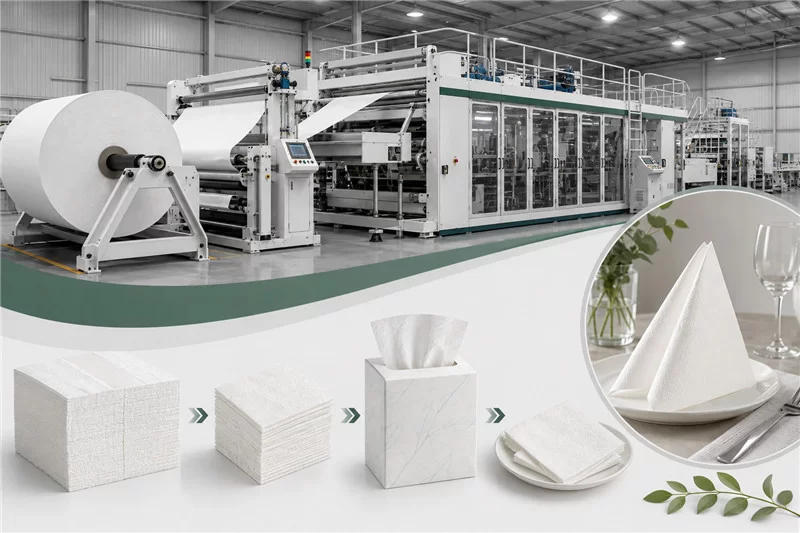
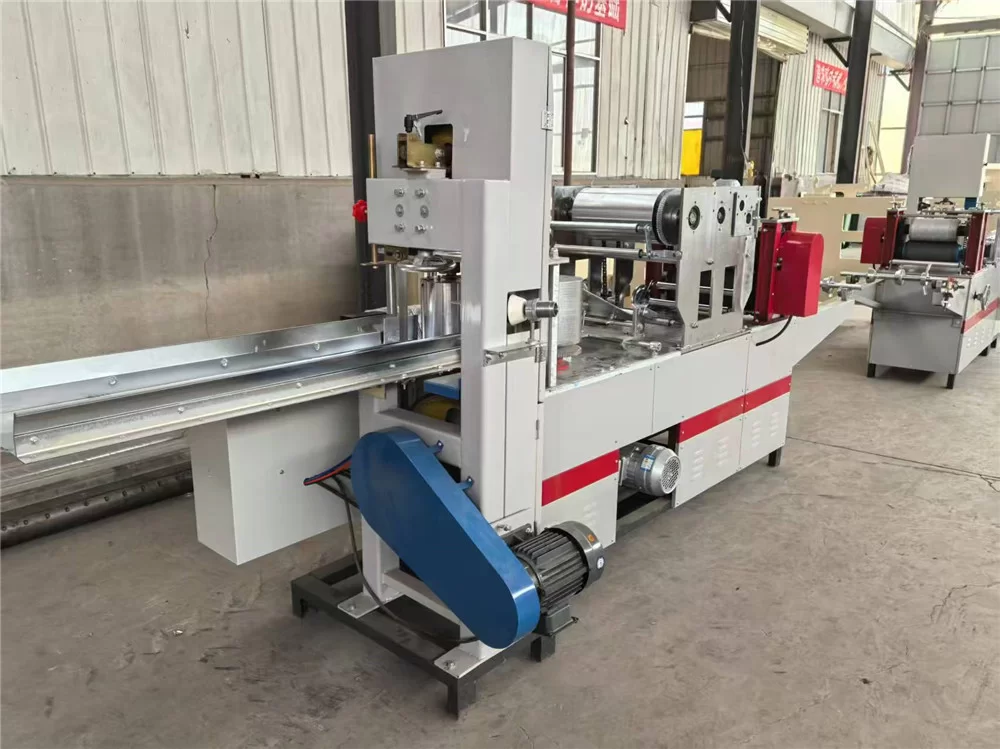
Suitable equipment may include a paper napkin machine equipped with embossing and optional printing units, together with a counting and stack-discharge system and suitable bag or box packing equipment. Secondary carton packing equipment can be added when production volume and distribution requirements justify further automation. The machine working width, printing configuration, folding structure, embossing system and production capacity should be selected according to the confirmed napkin dimensions, paper basis weight, number of plies, printing design, stack quantity and expected order range.

Read application guide →
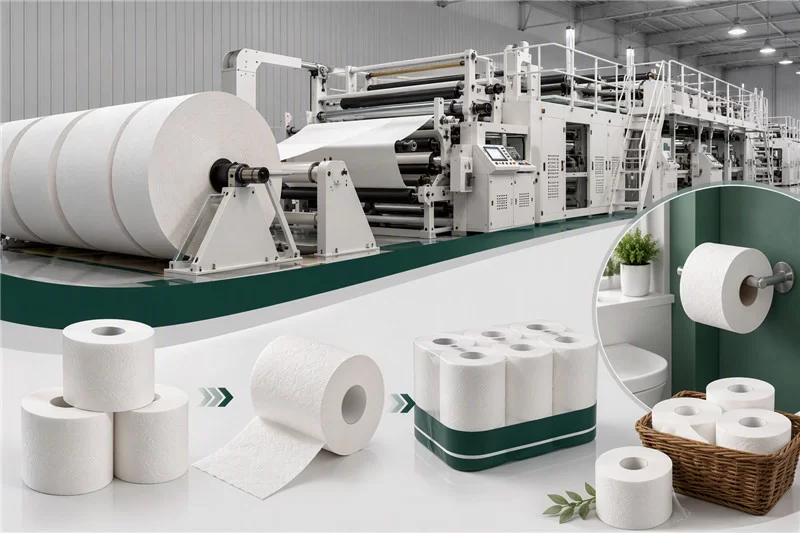
Hotel Toilet Paper Applications and Production RequirementsAPPLICATION 03

Hotel Toilet Paper Applications and Production Requirements

Review hotel toilet paper requirements, raw material choices, converting processes, suitable machine

APPLICATION REQUIREMENTS

Hotel toilet paper should match the installed dispenser, housekeeping routine, room-supply method and expected consumption. Important requirements include consistent roll width and diameter, centered paper cores, controlled winding density, stable perforation and packaging that protects each roll during storage and distribution. Higher-positioned hotels may place greater emphasis on softness, appearance and individual wrapping, while budget hotels and public washrooms may prioritize dependable dispensing, controlled cost and larger supply packs.

SUITABLE EQUIPMENT

Suitable equipment may include a toilet paper rewinding machine, automatic log saw or band saw, individual roll wrapping machine, multi-roll packing machine and secondary packing equipment. The rewinder should match the jumbo roll width, ply structure, embossing requirement, core specification and finished-roll diameter. Cutting and packing equipment should be selected according to the required hotel supply format, target output, available labor and preferred automation level.

Read application guide →
APPLICATION DECISION MODEL

Six questions connect product demand with the converting process

Use the same sequence contained in each application detail page so product requirements remain separate from machine specifications.

01PRODUCT USE

Application Requirements

Where the product is used and what performance the finished product needs.

02MATERIAL BASIS

Suitable Raw Materials

Paper or nonwoven properties that support the intended product and process.

03PROCESS ROUTE

Converting Process

The sequence of forming, folding or rewinding, cutting, transfer and packing.

04EQUIPMENT RANGE

Suitable Equipment

The principal and supporting machines required by the selected process.

05SUPPLY FORMAT

Packaging Formats

Retail pack, refill pack, bag, box, bundle or carton requirements.

06PRODUCT CONTROL

Quality Requirements

Dimensions, count, softness, strength, appearance and pack consistency.

FROM APPLICATION TO EQUIPMENT

Use the product requirement to narrow the equipment scope

An application page answers what must be produced. Machines and production lines answer how the product will be produced under a defined output, labor and factory condition.

1

Choose the application

Identify product use, dimensions, material and packaging.

2

Confirm the process

Define converting, cutting, transfer and packing stages.

3

Select the purchase scope

Choose an individual machine or a complete connected line.

4

Review factory conditions

Confirm output, labor, workshop and utility information.

FREQUENTLY ASKED QUESTIONS

Common questions when choosing equipment by application

Application pages define what the finished product must achieve. Final machinery selection still requires the actual product, material, output, packaging and factory information.

01How is an application page different from a solution page?

An application page begins with the finished product and explains its use, raw material, converting route, suitable equipment, packaging and quality requirements. A solution page begins with factory conditions such as investment, labor, workshop space, automation or an existing production bottleneck.

02Should equipment selection begin with the finished product?

Yes. Product format, dimensions, ply, basis weight, roll or stack size, embossing, folding and packaging affect the required converting principle and machine range. Selecting a machine before these details are clear can lead to an unsuitable process.

03What information is needed to match equipment to an application?

Provide the finished-product sample or dimensions, intended use, raw material, quality requirements, target output, pack format and factory conditions. This information helps identify the converting, cutting, transfer and packing stages required.

04Can one application use different automation levels?

Yes. The same finished product may be produced with independent machines, a semi-automatic arrangement or a connected automatic line. The suitable level depends on output, product stability, available operators, packaging requirements, workshop and investment plan.

05How do I decide between an individual machine and a complete line?

Choose an individual machine when one compatible process is missing from an existing factory. Choose a complete line when the main converting, cutting, transfer and packing stages must be planned and balanced together for a new product or factory.

START WITH YOUR TARGET PRODUCT

Turn the finished product into a practical equipment plan.

Leave your email address. Product format, raw material, output, packaging and workshop conditions can be confirmed during the follow-up.

Your email is used only to respond to this inquiry.