
Process, equipment connection and operating requirements
Review how the complete line is arranged, which finished products it supports, how packaging is handled and what factory conditions should be confirmed.
Production process and equipment connection
2100 Automatic Gluing and Laminating Kitchen Towel Production Line
The 2100 Automatic Gluing and Laminating Kitchen Towel Production Line converts jumbo tissue rolls into embossed, laminated, perforated, cut and packed kitchen towel rolls through a connected production process.
The proposed configuration combines a kitchen towel rewinding and perforating machine, glue lamination system, automatic band-saw cutter, roll packing machine, edge sealing machine and automatic bundling machine. It is intended for factories producing two-ply or three-ply kitchen towel rolls with visible embossing and stable ply bonding.
The principal processing and packing stages are connected automatically, while operators remain necessary for jumbo roll replacement, initial paper threading, glue preparation, film and bag replenishment, product inspection, specification adjustment and routine maintenance.
Suitable Finished Products
Two-ply kitchen towel rolls
Three-ply kitchen towel rolls
Glue-laminated kitchen paper rolls
Deep-embossed kitchen towel rolls
Perforated household paper towel rolls
Kitchen towel rolls with cardboard cores
Coreless kitchen paper rolls within the confirmed range
Individually packed kitchen towel rolls
Multi-roll kitchen towel bundles
The finished roll width, diameter, paper basis weight, number of plies, perforation pitch, embossing pattern and packaging format must be confirmed before the final equipment configuration is approved.
Production Process
Jumbo Roll Loading and Unwinding
Jumbo tissue rolls are installed on the independent unwind stands. The standard rear-frame configuration can use two separate paper-feeding layers with pneumatic roll loading, flat-belt feeding, independent motor drives and frequency control.
The maximum raw paper width is 2100 mm, while the maximum jumbo roll diameter is approximately 1500 mm. Manual paper threading and initial edge alignment are used in the standard configuration.
Independent unwind control helps adapt the paper tension to different raw material qualities. A raw paper break detection system monitors the web and stops the machine when abnormal paper feeding is detected.
Embossing and Glue Lamination
The paper passes through the embossing and glue lamination section before perforating and rewinding. The standard embossing configuration uses steel-to-wool embossing rollers.
The glue lamination frame uses a heavy steel-plate structure, while the glue-pattern roller has a reference diameter of approximately 394 mm. The roller can be processed with an engraved pattern according to the confirmed kitchen towel design.
Pneumatic pressure adjustment controls the embossing section. The glue roller uses a torque-based structure intended to reduce unnecessary roller wear and maintain more stable contact during production.
The principal drive of the lamination section uses independent motor control. Glue quantity, roller pressure and production speed must be matched to the paper strength, absorbency and required ply-bonding result.
Perforating and Rewinding
After embossing and lamination, the web enters the perforating and rewinding section. The perforation pitch is prepared according to the required market specification and finished sheet length.
The upper perforation blade uses an adjustable structure that allows the blade extension to be modified. Proper adjustment helps maintain sufficient web strength during rewinding while allowing the consumer to separate individual kitchen towel sheets.
The practical rewinding speed is approximately 80 to 200 m/min, while the reference design speed is up to 230 m/min. Actual speed depends on the raw paper, embossing depth, glue lamination, perforation quality and finished roll specification.
The rewinder can include automatic shaft extraction and finished-log transfer. Automatic roll change and core placement functions can be configured, with product specifications stored in the control system and material shortage alarms displayed to the operator.
Core and Coreless Production
The standard configuration can be prepared for kitchen towel rolls with cardboard cores. An optional coreless rewinding device can also be included when the finished product does not require a paper tube.
Core and coreless products use different winding and product-release methods. The required roll structure must therefore be confirmed before the machine is manufactured.
Automatic Band-Saw Cutting
Completed kitchen towel logs are transferred to the DT2200 automatic high-speed band-saw cutter. The cutter divides the long paper logs into finished kitchen towel rolls.
The standard cutting diameter range is approximately 40 to 140 mm, while the cutting length can be adjusted from 50 to 300 mm. The practical cutting speed is approximately 100 to 150 cuts per minute.
A PLC and servo motor control the product feeding position. The blade grinding system uses automatic stepper-motor feeding to help maintain cutting quality during continuous operation.
The cutter must be selected according to the actual roll diameter, roll width, paper strength and rewinder output. The reference cutting range should be reconfirmed if the planned kitchen towel roll diameter is greater than 140 mm.
Primary Roll Packing
The cut kitchen towel rolls can be transferred to the R-600D automatic roll packing machine. The packing machine completes product feeding, film forming, bag-length recognition, sealing, cutting and finished-pack discharge.
The full-servo control system coordinates the main packing operations. The touch-screen interface allows operators to set product and packaging parameters, while fault self-diagnosis displays the affected section when an abnormal condition occurs.
A photoelectric tracking system controls the film cutting position. The machine can recognize the required bag length according to the selected roll product and stops automatically when no product enters the packing section, helping reduce empty bags and film waste.
The reference film width is up to 600 mm. The bag length range is approximately 150 to 450 mm, and the bag width range is approximately 180 to 300 mm. The standard packing speed is approximately 30 to 80 bags per minute.
The standard product diameter handled by the R-600D is up to approximately 110 mm. The product range must be checked again when the finished kitchen towel roll has a larger diameter.
Edge Sealing
The R-90 edge sealing machine can be added after primary packaging when the selected roll package requires heat-finished side edges.
The machine uses variable-frequency stepless speed control with a reference operating range of 1 to 25 m/min. The heating temperature on both sides can be controlled independently through digital settings and displays.
The stainless-steel structure provides a clean operating surface. The machine uses independent control and can enter standby operation without requiring continuous signal communication with the upstream equipment.
The standard processing range includes packaged roll lengths of approximately 150 to 280 mm and roll diameters of approximately 90 to 110 mm.
Automatic Bundling
Individually packed rolls can enter the R-FA800 automatic roll paper bundling machine for secondary packaging.
The bundling machine groups the required number of roll packages, loads them into a preformed heat-sealing bag and completes the secondary sealing process.
The reference packaging speed is up to 20 bundles per minute. The maximum package size is approximately 950 × 430 × 190 mm, and the standard configuration can accommodate confirmed arrangements from 2 to 10 lines.
The standard machine uses PE or APP double-sided heat-sealing preformed bags. The bag dimensions, film characteristics, product arrangement and required bundle appearance must be confirmed using actual product samples.
Main Equipment Composition
Two-layer independent jumbo roll unwind system
Pneumatic jumbo roll loading device
Web feeding and tension-control system
Raw paper break detection system
Steel-to-wool embossing unit
Glue lamination system
Perforating unit
2100 mm kitchen towel rewinding machine
Automatic roll change and core placement device
Optional coreless rewinding device
Automatic shaft extraction and log transfer system
DT2200 automatic high-speed band-saw cutter
R-600D automatic roll packing machine
R-90 edge sealing machine
R-FA800 automatic bundling machine
PLC and touch-screen control system
Electrical cabinets and safety guards
Reference Technical Parameters
| Production Line Model | 2100 Automatic Gluing and Laminating Series |
|---|---|
| Maximum Raw Paper Width | 2100 mm |
| Maximum Jumbo Roll Diameter | Approximately 1500 mm |
| Reference Jumbo Roll Weight | Up to approximately 0.5 t per roll in the listed configuration |
| Rewinding Design Speed | Up to 230 m/min |
| Practical Rewinding Speed | Approximately 80 to 200 m/min |
| Embossing Method | Steel-to-wool embossing |
| Lamination Method | Patterned glue lamination |
| Perforation Pitch | Prepared according to the confirmed market specification |
| Log Cutting Diameter | Approximately 40 to 140 mm |
| Log Cutting Length | Approximately 50 to 300 mm |
| Cutting Speed | Approximately 100 to 150 cuts/min |
| Primary Packing Speed | Approximately 30 to 80 bags/min |
| Bundling Speed | Up to approximately 20 bundles/min |
| Maximum Bundle Size | Approximately 950 × 430 × 190 mm |
| Reference Installed Power | Approximately 60 to 70 kW for the listed connected equipment |
| Air Pressure | Approximately 0.45 to 0.60 MPa |
| Operators | Approximately 4 to 6 people per shift |
| Recommended Line Area | Approximately 30 to 35 m × 8 to 10 m |
| Recommended Workshop Area | Approximately 400 to 550 m² |
| Power Supply | 380 V, 50 Hz, three-phase, or customized |
The listed parameters describe the proposed connected configuration. Final values must be reconfirmed from the actual kitchen towel roll diameter, width, paper structure, embossing pattern, packaging format and workshop layout.
Automation and Operator Involvement
The line connects the principal processes of embossing, glue lamination, perforating, rewinding, log cutting, roll packing, edge sealing and bundling.
Automatic operations can include:
Independent paper feeding
Raw paper break detection
Embossing and glue lamination
Perforating and rewinding
Automatic roll change and core placement
Automatic log discharge
Servo-controlled log feeding
Automatic log cutting
Roll feeding and primary packaging
Bag-length recognition
Heat sealing
Secondary bundle packing
Operators remain necessary for:
Jumbo roll replacement
Initial paper threading and edge alignment
Glue preparation and replenishment
Core and packaging material replenishment
Printing or packaging film adjustment where applicable
Product inspection
Specification changeover
Waste removal
Blade inspection
Cleaning and routine maintenance
Finished-product collection or pallet handling
A standard arrangement requires approximately four to six operators per shift, depending on the packaging configuration, material replacement method and finished-product handling process.
Electrical and Control Components
The proposed configuration can use Siemens PLC and touch-screen components, INVT frequency converters, AirTAC pneumatic components and Omron electrical switches. Other confirmed industrial brands may be used according to component availability and the final technical agreement.
The control system manages the principal production settings, operating status and fault information. Independent frequency control helps adjust paper feeding and machine speed according to the raw material and finished product.
The destination voltage and electrical standard must be confirmed before manufacturing. The final electrical component list should be stated in the technical agreement rather than assumed from a general configuration document.
Workshop and Utility Requirements
The recommended connected line area is approximately 30 to 35 m long and 8 to 10 m wide. A workshop area of approximately 400 to 550 m² provides additional space for raw material handling, packaging materials, maintenance access and finished products.
The workshop should provide:
A level reinforced concrete floor
A clear height of at least 4.5 m
Three-phase industrial electrical power
Compressed air at approximately 0.45 to 0.60 MPa
Suitable jumbo roll lifting equipment
A controlled area for glue preparation
Storage for packaging films and preformed bags
Maintenance passages around the equipment
Finished-product collection and storage areas
Safe emergency access
The final line layout should consider doors, columns, raw material entry, finished-product exit, operator routes and the location of electrical and compressed-air connection points.
Production Capacity Considerations
The rewinder, cutter and packaging machines use different capacity units. The rewinder is rated in metres per minute, the cutter in cuts per minute, the primary packing machine in bags per minute and the bundling machine in bundles per minute.
These values should not be added together or treated as the same output measurement. The finished-product capacity of the complete line depends on:
Finished roll width and diameter
Number of paper plies
Raw paper basis weight
Embossing depth
Glue lamination settings
Perforation pitch
Number of rolls in each package
Bundle arrangement
Material replacement time
Normal operating efficiency
The production stage with the lowest sustainable output determines the practical capacity of the connected line. Final output should therefore be calculated after the finished kitchen towel and packaging format are confirmed.
Factory Inspection Before Shipment
Before shipment, the confirmed line can be checked through mechanical inspection, electrical inspection and trial operation.
The inspection can include:
Frame and transmission inspection
Electrical cabinet and wiring inspection
Sensor and pneumatic component testing
Safety guard and emergency stop verification
Paper feeding and tension checks
Embossing pattern inspection
Glue lamination inspection
Perforation and rewinding tests
Finished log diameter checks
Band-saw cutting tests
Finished roll width inspection
Primary packing tests
Edge sealing checks
Bundle format and sealing inspection
Conveyor and control-signal testing
Where suitable material is available, the trial paper should be close to the customer’s planned kitchen towel material and product specification.
Information Required for Final Configuration
Before the production line is finalized, provide:
Finished kitchen towel roll width
Finished roll diameter
Weight per finished roll
Number of paper plies
Raw paper basis weight
Jumbo roll width and diameter
Cardboard core diameter or coreless requirement
Sheet length and perforation pitch
Embossing pattern
Glue lamination requirement
Required output per shift
Individual roll package dimensions
Number of rolls in each bundle
Packaging film or bag specification
Workshop drawing
Available operators
Destination voltage and frequency
Available compressed-air conditions
These details are used to confirm the processing range, line speed, cutting machine, packing equipment, total installed power, personnel requirement and workshop layout.
Configuration Note
The 2100 Automatic Gluing and Laminating Kitchen Towel Production Line is a configurable equipment combination rather than one fixed standard model.
The listed document contains inconsistent values for the rewinder’s total power and external dimensions. These items must be confirmed against the final equipment drawing and electrical list before they are published as guaranteed specifications.
The reference output, installed power, operators and workshop area on this page are provided for preliminary planning. Final guaranteed values should be stated in the approved technical proposal according to the finished kitchen towel, raw material, packaging format and selected equipment scope.
Primary and secondary packing options
Equipment arrangement and workshop flow
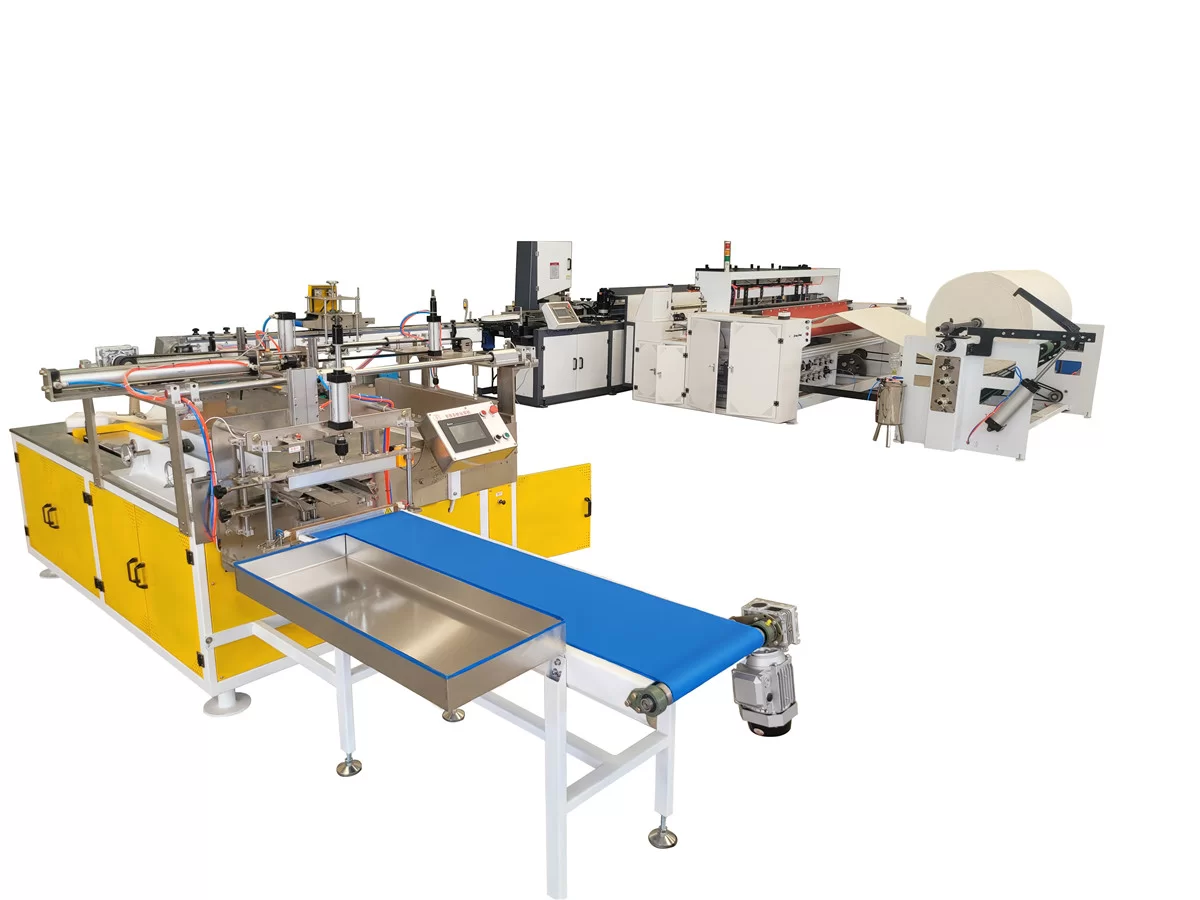
Practical output, operator quantity, installed power and workshop space depend on the final equipment combination, finished-product dimensions, packing format and operating conditions. Confirm these values in the final technical proposal.