
Function, configuration and line compatibility
Review how the machine works, what it can produce and which optional functions or supporting equipment may be needed for the complete process.
Machine overview and suitable production use
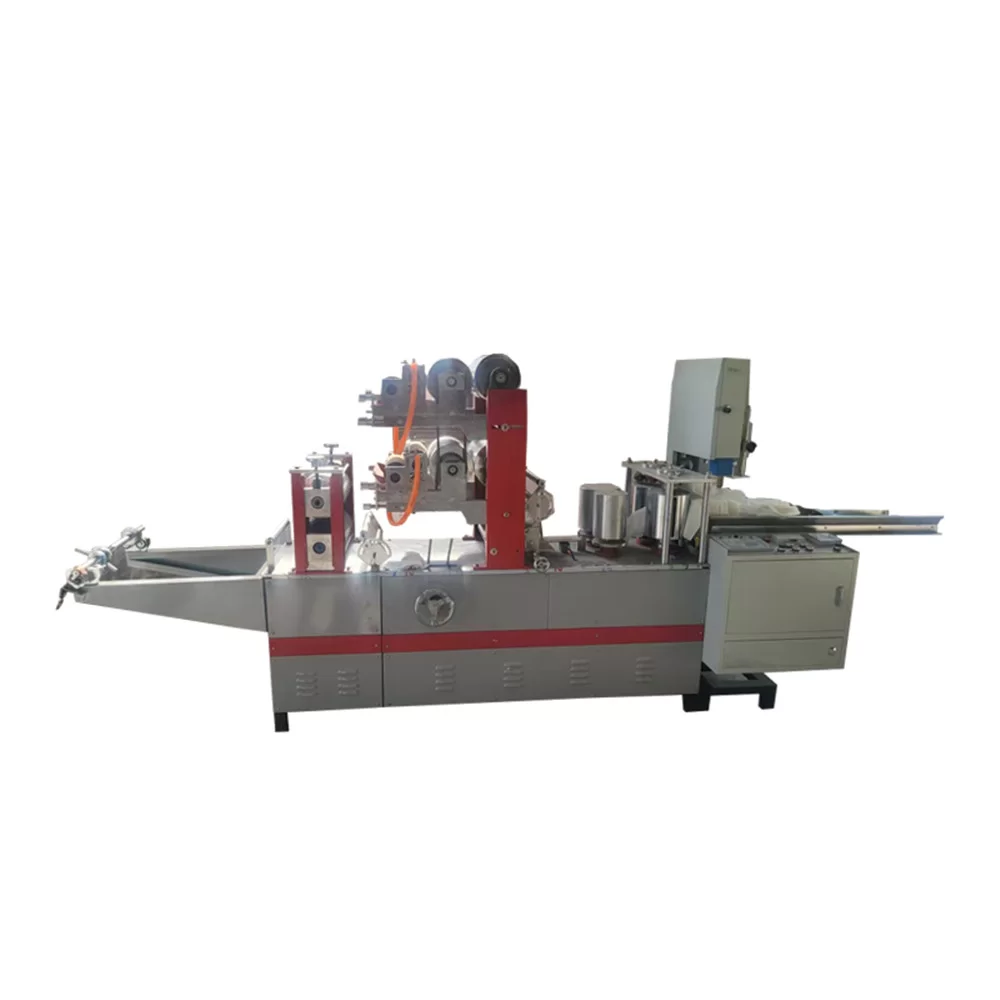
Model 330 Two-Color Napkin Paper Machine
The Model 330 Two-Color Napkin Paper Machine is designed for producing printed and embossed folded paper napkins from jumbo paper rolls. It combines two-color printing, steel-to-steel embossing, napkin folding and electronic counting in a compact machine structure.
The standard model uses 330 mm wide raw paper and produces napkins with an unfolded size of approximately 330 × 330 mm. After folding, the finished napkin size is approximately 165 × 165 mm.
With a practical production speed of 700 to 900 sheets per minute, the machine is suitable for restaurants, catering suppliers, distributors and paper product manufacturers requiring printed napkins in stable quantities.
Suitable Napkin Products
Two-color printed paper napkins
Single-color printed napkins
Embossed restaurant napkins
Beverage napkins
Table napkins
Promotional printed napkins
Customized folded paper napkins
The final product depends on the raw paper width, napkin dimensions, printing roller, embossing pattern and folding configuration. Product samples or drawings should be confirmed before customized rollers are manufactured.
Two-Color Printing
The printing section can apply two colors to the napkin surface during continuous production. This allows manufacturers to produce decorative patterns, simple promotional graphics and product-specific designs.
The printing result is affected by the raw paper surface, ink type, paper absorbency, roller pressure and production speed. Printed artwork should be reviewed before the printing rollers are prepared.
For products that do not require two colors, the machine can also operate with a simplified single-color printing arrangement within the confirmed configuration.
Steel-to-Steel Embossing
The standard machine uses steel-to-steel embossing rollers to form a clear and consistent surface pattern. Embossing improves the appearance of the napkin and helps distinguish different product grades.
Customized embossing rollers can be produced according to the required pattern. The embossing depth must be matched to the paper basis weight and tensile strength to avoid paper damage during high-speed operation.
Folding and Electronic Counting
After printing and embossing, the paper enters the folding section. The standard 330 mm paper web is folded into a finished size of approximately 165 × 165 mm.
The electronic counting system records the number of napkins produced and helps the operator separate finished stacks according to the packaging requirement. The required quantity in each stack should be coordinated with the downstream packing method.
Production Capacity
The standard production speed is approximately 700 to 900 sheets per minute under stable operating conditions.
Actual output depends on:
Raw paper quality and tensile strength
Paper basis weight and number of plies
Printing coverage and ink condition
Embossing pattern and pressure
Finished napkin dimensions
Operator experience
Normal adjustment and cleaning time
Downstream collection and packaging capacity
The maximum machine speed should not be treated as guaranteed packed output. Finished pack production also depends on counting, stack handling and packaging efficiency.
Compact Machine Structure
The reference machine dimensions are approximately 3000 × 1300 × 1750 mm. The compact arrangement reduces installation space while keeping the printing, embossing and folding sections accessible for normal operation.
A working area larger than the machine dimensions should be reserved for jumbo roll loading, paper threading, ink preparation, napkin collection, electrical cabinet access and routine maintenance.
Power and Factory Requirements
The main power is approximately 4.5 kW. The machine can be prepared for 380 V, 50 Hz, three-phase power or another confirmed industrial voltage.
The workshop should provide:
A level and stable floor
Suitable three-phase electrical power
Space for raw paper roll handling
Ventilation around the printing area
Storage for printing ink and finished napkins
Safe operator and maintenance access
Connection with Packing Equipment
The Model 330 machine produces folded and counted paper napkins but does not automatically complete all packaging operations in the standard configuration.
Finished napkin stacks can be collected manually or transferred to a compatible packing machine. Available downstream options include bag sealing, automatic napkin packing, date coding, carton packing and carton sealing.
The packing equipment should be selected according to the folded napkin size, number of pieces per pack, bag dimensions, sealing method and required pack output.
Information Required Before Configuration
Before confirming the machine, provide the following information:
Unfolded napkin dimensions
Folded napkin dimensions
Number of paper plies
Paper basis weight
Jumbo roll width and diameter
Printing colors and artwork
Embossing pattern
Required production speed
Number of napkins per pack
Packaging method
Destination voltage and frequency
These details are used to confirm the printing rollers, embossing rollers, folding structure, electrical system and supporting equipment.
Configuration Note
The Model 330 Two-Color Napkin Paper Machine is an individual converting machine rather than a complete napkin production line. The standard machine completes printing, embossing, folding and electronic counting.
Automatic bag packing, bundle handling and carton packing require additional equipment. Final speed, machine dimensions and product range should be confirmed according to the raw paper, finished napkin and selected printing and embossing configuration.
How the machine processes the material
The Model 330 Two-Color Napkin Paper Machine converts jumbo paper rolls into printed, embossed and folded paper napkins. The machine combines paper unwinding, two-color printing, steel-to-steel embossing, folding and electronic counting in one continuous process.
The jumbo paper roll is installed on the unwind stand and fed into the machine. The paper web passes through the tension-adjustment and guide rollers before entering the printing section. Stable web feeding helps maintain the printing position and folding accuracy.
The two-color printing unit applies the selected pattern to the paper surface. Printing rollers can be prepared according to the confirmed artwork, printing area and color arrangement. Ink viscosity, printing pressure and raw paper absorbency affect the final printing quality.
After printing, the paper passes through the steel-to-steel embossing unit. The embossing rollers form a clear and uniform surface texture while helping improve the appearance of the finished napkin.
The embossed paper enters the folding section and is folded into the specified napkin format. With a 330 mm raw material width, the standard configuration produces an unfolded napkin size of approximately 330 × 330 mm and a folded size of approximately 165 × 165 mm.
The electronic counting system records the number of finished napkins during production. The napkins are discharged in folded stacks for collection or transfer to separate packing equipment.
This machine completes printing, embossing, folding and counting. Automatic bagging, sealing, bundle packing and carton handling require separate supporting equipment.
Machine data for configuration review
| Machine Name | Model 330 Two-Color Napkin Paper Machine |
|---|---|
| Machine Model | R-330 |
| Raw Material Width | 330 mm |
| Maximum Jumbo Roll Diameter | 900 to 1000 mm |
| Unfolded Napkin Size | Approximately 330 × 330 mm |
| Folded Napkin Size | Approximately 165 × 165 mm |
| Production Speed | 700 to 900 sheets/min |
| Printing Configuration | Two-color printing |
| Embossing System | Steel-to-steel embossing |
| Counting Method | Electronic counting |
| Main Power | 4.5 kW |
| Machine Dimensions | Approximately 3000 × 1300 × 1750 mm |
| Machine Weight | Approximately 1000 kg |
| Power Supply | 380 V, 50 Hz, three-phase, or customized |
The listed parameters describe the standard R-330 configuration. Printing rollers, embossing patterns, napkin dimensions, voltage and supporting equipment can be adjusted according to the confirmed product requirements.
Functions available by requirement
Machines used before or after this process
Design speed and reference output are not the same value. Practical production depends on raw material, finished-product dimensions, machine configuration, operator preparation and the capacity of connected equipment.