
Function, configuration and line compatibility
Review how the machine works, what it can produce and which optional functions or supporting equipment may be needed for the complete process.
Machine overview and suitable production use
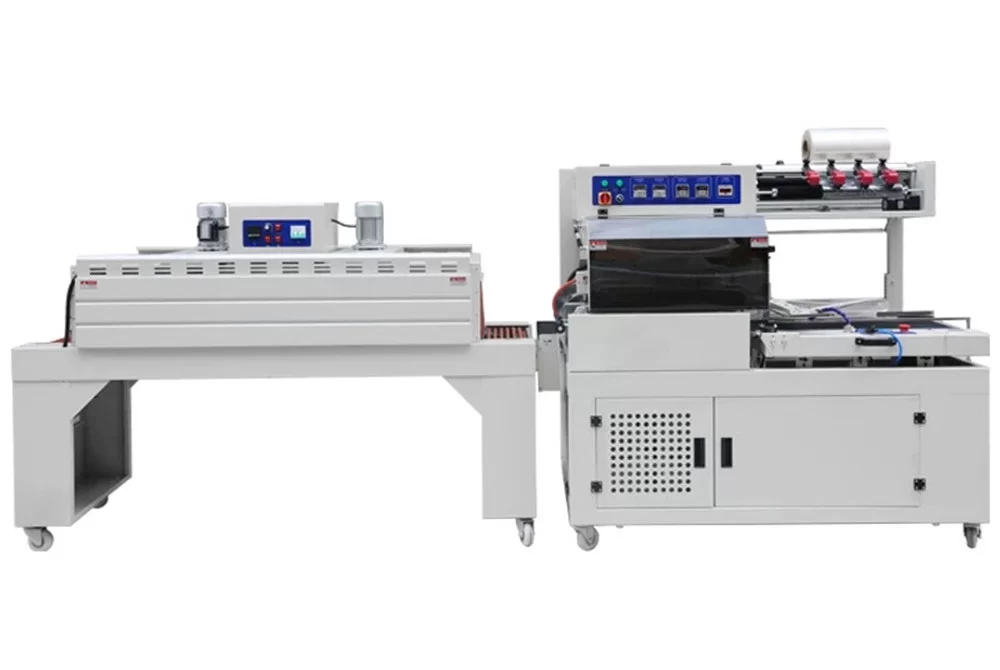
ZWG-210 Automatic Heat-Shrink Packaging Machine
The ZWG-210 Automatic Heat-Shrink Packaging Machine is used for primary film packaging of finished kitchen towel rolls and other compatible household paper roll products. The machine combines product feeding, film feeding, sealing and cutting with a heat-shrink tunnel to form compact retail packs.
This is an individual packaging machine rather than a complete kitchen towel production line. The finished rolls must first be produced by a rewinding machine and cut to the required width by a log saw or another compatible cutting machine.
Suitable Finished Products
Finished kitchen towel rolls with paper cores
Compatible household paper rolls within the confirmed size range
Single-roll or arranged multi-roll packs supported by the approved feeding and film configuration
Packaging Process
Finished rolls enter the feeding section in the required orientation. The machine feeds the packaging film, tracks the sealing and cutting position, and forms the initial film package around the product. The sealed pack then passes through the dual-temperature-zone shrink tunnel, where hot-air circulation shrinks the film around the arranged rolls. The completed pack is discharged for inspection, collection or connection to downstream handling equipment.
Control and Packaging Material
The documented configuration uses three-servo control, a color touch screen and high-sensitivity photoelectric tracking. Bag length, operating speed and temperature can be adjusted according to the confirmed product and film. PVC or POF film is listed for the documented configuration. Film samples should be tested before continuous production, especially when printed film, unusual thickness or several package sizes are required.
Reference Operating Range
The documented packaging speed is approximately 30 to 100 packs per minute. Applicable package length is approximately 60 to 300 mm and package width is approximately 80 to 130 mm. Practical output depends on roll dimensions, pack arrangement, film, sealing conditions, shrink settings and upstream product feeding.
Information Required for Configuration
Finished roll diameter and width
Core or coreless roll structure
Number and arrangement of rolls per pack
Required package length, width and height
Film type, thickness, width and printed-mark requirement
Required packs per minute
Upstream cutting and conveying arrangement
Destination voltage and frequency
Available workshop dimensions and material-flow direction
Configuration Note
The listed values are references from the documented ZWG-210 configuration. Final operating range, installed power, package format and equipment interface must be confirmed in the approved technical agreement and layout.
How the machine processes the material
Finished rolls are transferred into the wrapping section, where servo-controlled film feeding and photoelectric tracking coordinate product position, film length, sealing and cutting. The preliminary pack then enters the heat-shrink tunnel. Controlled hot-air circulation shrinks the film around the product, after which the finished pack is discharged for inspection or downstream handling.
Machine data for configuration review
Model | ZWG-210 |
Applicable products | Finished kitchen towel rolls and compatible household paper roll products |
Packaging speed | Approximately 30-100 packs/min |
Applicable package size | Length 60-300 mm; width 80-130 mm |
Machine power | 4.5 kW |
Shrink-tunnel power | 15 kW |
Reference dimensions | 8000 x 1200 x 1600 mm |
Applicable film | PVC or POF |
Reference weight | Approximately 1000 kg |
Control | Three-servo control, color touch screen and photoelectric tracking |
Functions available by requirement
Alternative product feeding and pack arrangements
Date coding
Waste-film recovery
Finished-pack takeaway conveyor
Destination electrical configuration
Machines used before or after this process
Design speed and reference output are not the same value. Practical production depends on raw material, finished-product dimensions, machine configuration, operator preparation and the capacity of connected equipment.