
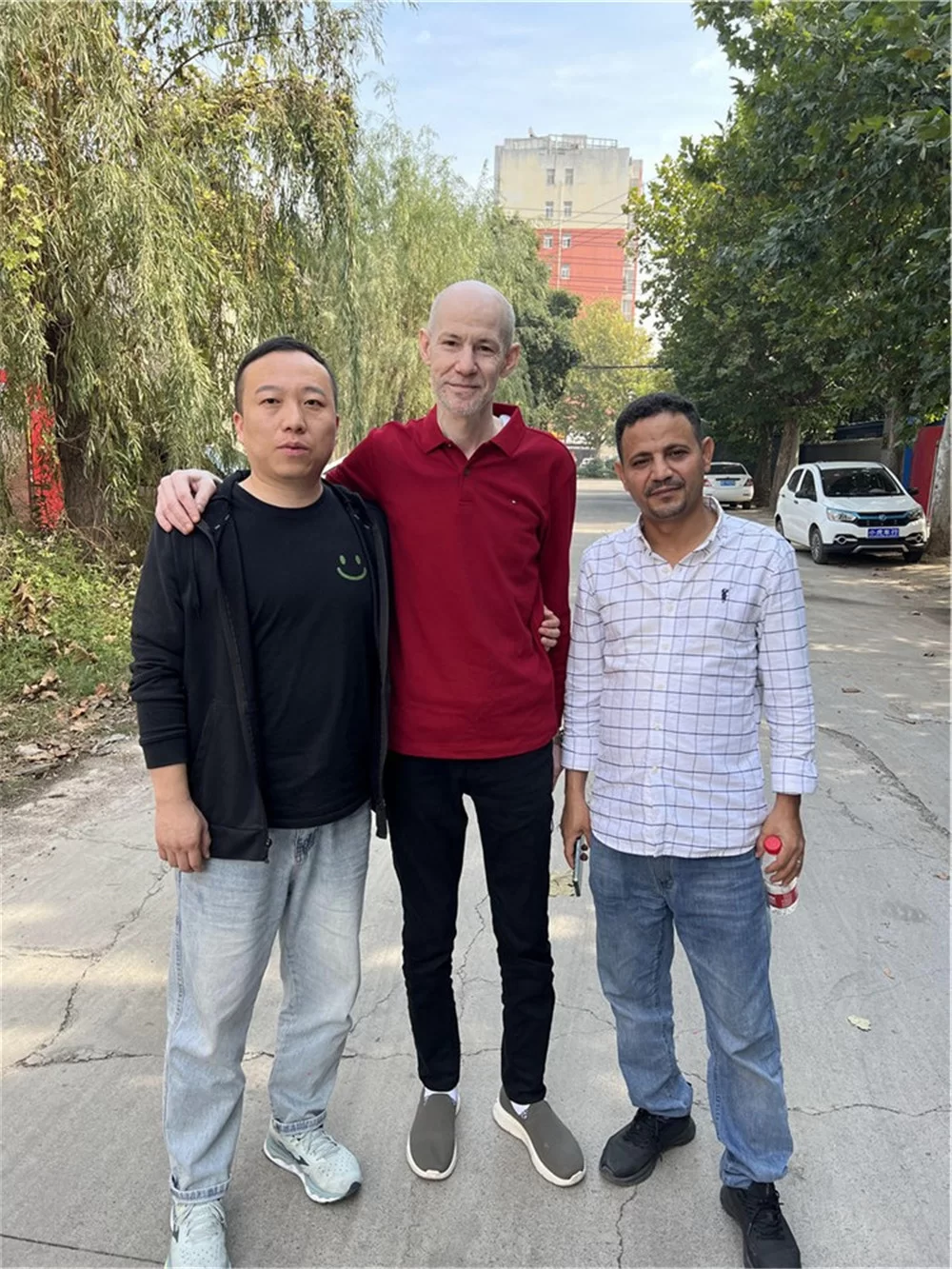

Customer reception is not limited to a workshop tour. Technical discussions before and after a factory visit are important because the same tissue product can require different machinery according to its specification, output target and packing method. The photographs used with this article record different customer reception activities and do not represent one single meeting or a confirmed order.
Starting with the Customer's Product Plan
The first step is to identify what the customer intends to manufacture. A general request for a paper machine is not enough to determine a reliable configuration. The discussion should clarify whether the planned product is toilet paper, facial tissue, kitchen towel, paper napkin, folded hand towel or another dry paper product.
The product dimensions, number of plies, embossing, folding method, roll diameter, sheet count and retail pack format determine the required processing stages.
Matching the Product with a Production Route
According to the finished product, a proposal may involve a toilet paper production line, facial tissue production line, kitchen towel production line or napkin production line. These lines do not use the same forming process, and their cutting and packing sections also differ.
The purpose of this comparison is not to add unnecessary equipment. It is to identify the shortest practical process from the available raw material to the required retail product.
Confirming Raw Material and Output
Raw-material information affects feeding, tension control, cutting and folding stability. Useful information includes jumbo-roll width and diameter, basis weight, number of plies and material strength. A sample or data sheet helps reduce assumptions during equipment selection.
Output should be discussed for the complete process. The speed of the main machine alone does not determine the output of a connected line. Cutting, conveying, counting and packing capacities must match the upstream operation.
Reviewing Workshop and Utility Conditions
Workshop length, width, clear height, column position and available access affect the equipment layout. Electrical voltage and frequency, compressed-air supply, ventilation and material-handling routes also need to be confirmed before a final drawing is prepared.
For a new converting factory, space should be reserved for jumbo-roll storage, operating access, finished-product handling and possible future automation.
Preparing the Next Technical Step
After the product, raw material, output and workshop conditions are reviewed, the technical team can prepare a more relevant proposal. Depending on the project, the proposal may cover an individual machine, a semi-automatic arrangement or a connected system with cutting and packing equipment.
A customer meeting does not by itself indicate that an order has been confirmed. Its value is to replace general assumptions with clear technical information so that quotations, layouts and machine configurations can be compared on the same basis.
Published by
Zhengzhou Renix Machinery Co., Ltd.
This update is prepared from company production, inspection, testing or delivery records. Equipment details should be read together with the confirmed project configuration.
Copyright © Zhengzhou Renix Machinery Co., Ltd.. Original text and photographs may not be reproduced for commercial use without written permission. Quotations must identify the source and link to the original page.