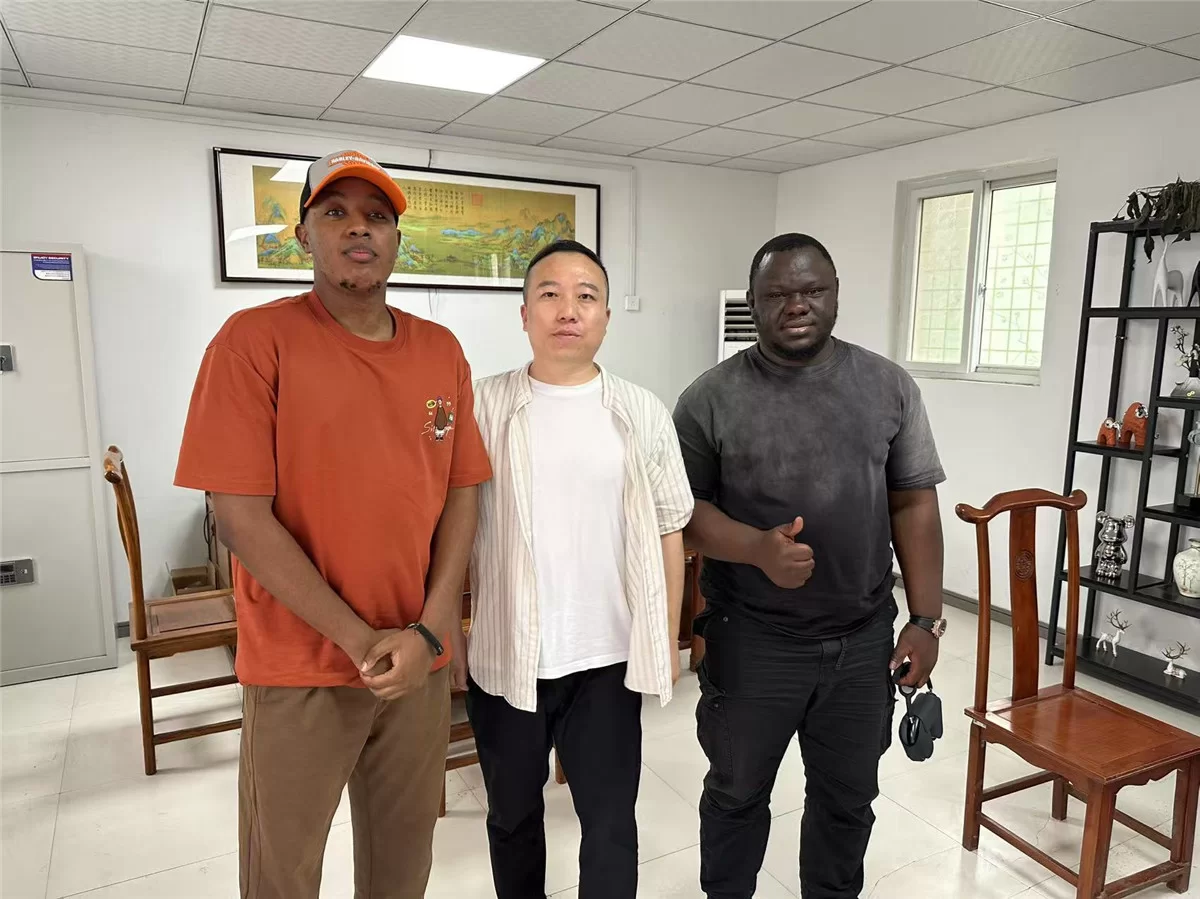
A customer recently visited the Renix factory to inspect tissue paper converting equipment and discuss the requirements of a planned production project.
A factory visit provides an opportunity to review equipment structure and production processes directly. However, the visit is most useful when it begins with a clear understanding of the intended finished product.
Starting with the Finished Product
The discussion began with the type of tissue product the planned factory is expected to produce.
The equipment needed for toilet paper is different from the machinery used for facial tissue, kitchen towel, paper napkins or disposable cleaning cloths. Even within one product category, the required configuration may vary according to dimensions, number of plies, embossing, packing format and target output.
Product samples, photographs or specification sheets can help clarify the required result. Without clear finished-product information, equipment selection may focus only on machine speed or price rather than the actual production requirement.
Inspecting Individual Machines
During the visit, relevant machines were reviewed according to their roles in the production process.
An individual machine should be evaluated based on its specific function. A toilet paper rewinder performs rewinding, embossing and perforation according to its configuration, while a log saw performs the downstream cutting process.
A facial tissue folding machine creates interfolded tissue logs, but cutting and packing require separate equipment.
This distinction helps prevent a single machine from being confused with a complete production line.
Comparing Semi-Automatic and Automatic Configurations
The discussion also covered differences between semi-automatic and automatic production arrangements.
A semi-automatic configuration can reduce the initial equipment scope, but it may require operators to transfer products between rewinding, cutting and packing stages.
A connected automatic line can reduce some manual transfer, but the machines must be matched according to product dimensions, operating sequence and control interfaces.
Automatic production does not mean that all factory work is eliminated. Operators may still be required for raw-material preparation, packing-material supply, carton handling, quality inspection and equipment monitoring.
The appropriate automation level should therefore be determined according to labor conditions, budget, production targets and upgrade plans.
Reviewing Workshop Conditions
Factory space influences both the equipment layout and the daily workflow.
During project planning, it is necessary to consider more than the machine dimensions. Space is also needed for:
Raw-material storage
Jumbo roll handling
Operator access
Equipment adjustment
Maintenance
Packing-material storage
Finished-product collection
Internal transport
Doors, columns and fixed factory structures may affect the final equipment positions. The locations of the electrical supply and compressed-air connections should also be confirmed.
Factory Testing and Product Samples
Where suitable equipment and raw material are available, a factory test may help the customer understand the operating sequence.
The test should be evaluated according to the material and settings used. A displayed operating speed alone does not confirm practical production capacity for every possible product.
Finished samples can be inspected for dimensions, folding or rewinding quality, cutting appearance and packing compatibility. If the customer requires a specific product, suitable raw material should be prepared in advance where possible.
Information Required After the Visit
A factory visit usually helps narrow the equipment scope, but additional technical information may still be needed before the final configuration is prepared.
Customers should confirm:
Finished-product dimensions
Raw-material specifications
Jumbo roll width
Number of plies
Target output
Packing quantity
Preferred automation level
Workshop dimensions
Local power conditions
Project destination
These details help the technical discussion move from a general equipment review to a configuration that is more closely related to the planned factory.
Published by
Zhengzhou Renix Machinery Co., Ltd.
This update is prepared from company production, inspection, testing or delivery records. Equipment details should be read together with the confirmed project configuration.
Copyright © Zhengzhou Renix Machinery Co., Ltd.. Original text and photographs may not be reproduced for commercial use without written permission. Quotations must identify the source and link to the original page.