
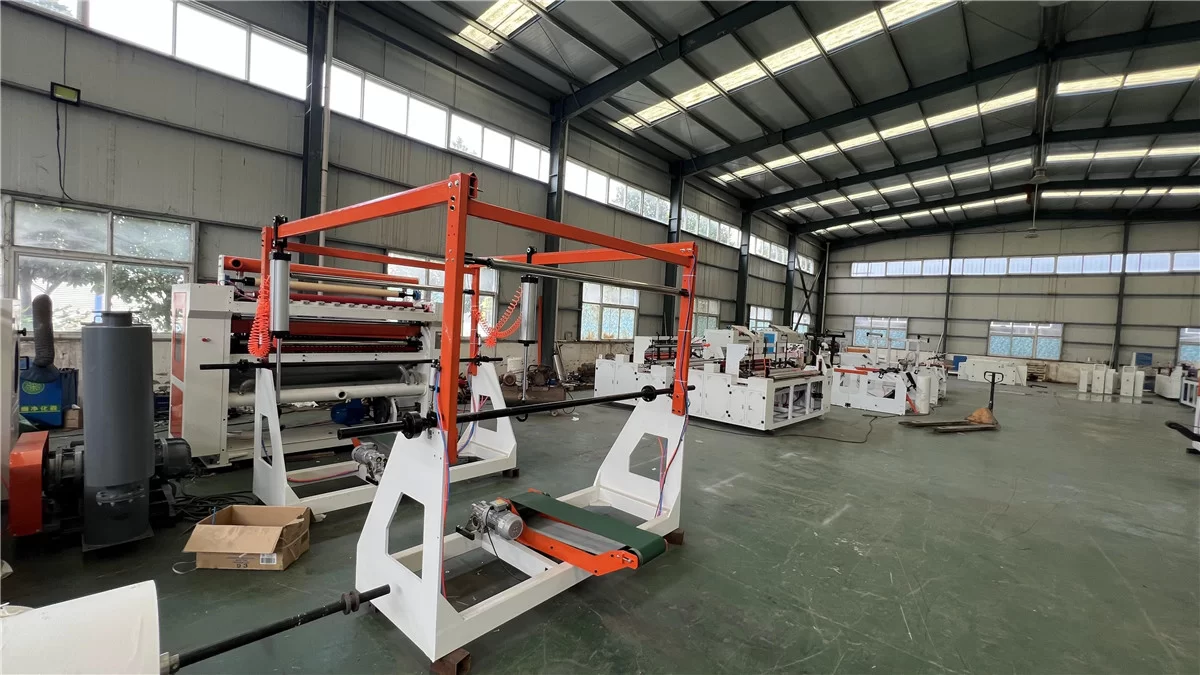
Electrical inspection is an important part of preparing tissue paper converting equipment for trial operation.
A recent inspection focused on the control cabinet, cable connections, sensors, operating controls and safety-related signals of a tissue converting machine.
The objective was to confirm that the electrical system corresponded with the machine configuration before continuous material testing.
Control Cabinet Inspection
The inspection began with the internal arrangement of the control cabinet.
Installed components were reviewed against the confirmed equipment functions. Terminal connections, cable routes and component identification were checked so that wiring issues could be addressed before the machine entered full operation.
A control cabinet should not be evaluated only by its external appearance. Internal organization affects inspection, adjustment and future maintenance.
Connections should remain identifiable, and cable routes should not create unnecessary pressure or interfere with cabinet components.
External Wiring and Cable Routing
External cables connect the control cabinet with motors, sensors, switches and other operating sections.
The inspection checks whether these cables are routed away from moving mechanical components and areas where paper or operators may come into contact with them.
Cable protection and fixing points are reviewed because vibration and repeated machine movement may affect poorly secured wiring.
The final routing also needs to consider equipment installation. If a machine is prepared in separate sections for transport, the corresponding cables and connection points should be identifiable during reassembly.
Sensor Position and Response
Sensors are used to monitor material position, machine movement, product transfer and operating conditions.
An incorrectly positioned sensor may fail to detect the required target or may generate an unstable signal. During inspection, mounting position, detection distance and response are checked.
The team may operate individual machine movements to observe whether each sensor changes state at the intended point in the sequence.
Sensor testing is repeated during material operation because paper movement, vibration and product shape can influence detection.
Motor, Cylinder and Movement Tests
Individual motors and controlled movements are tested before the complete automatic cycle begins.
The operating direction is checked together with the related control command. Pneumatic cylinders and valves are also tested where they form part of the machine sequence.
Testing individual movements makes it easier to locate an electrical or control issue before several sections begin operating together.
After the individual checks are complete, the machine can proceed to a coordinated sequence and then to a material trial.
Emergency Stops and Safety Functions
Emergency-stop devices and selected safety functions are included in the inspection.
The response should be checked according to the machine design and confirmed control system. Guards, switches and protected operating areas must also be reviewed together with the mechanical inspection.
Electrical safety cannot be evaluated only through software settings. The relationship between control devices, machine movement and physical guarding needs to be considered.
Customers and operators should follow the supplied operating guidance and avoid bypassing safety devices during production.
Destination Power Conditions
Electrical preparation also depends on the destination power supply.
Before manufacturing is finalized, the customer should confirm relevant information such as voltage, frequency and phase requirements. Other utilities, including compressed air, should also be explained where applicable.
Unconfirmed power conditions can delay installation or require additional changes after the equipment arrives.
Electrical Checks During Material Testing
An unloaded electrical test confirms control responses, but it cannot fully represent continuous production.
During a material trial, the team observes the electrical system under actual machine movements. Sensors, motors and control responses are monitored while paper travels through the production process.
This stage may reveal adjustment requirements that were not visible during individual movement testing.
The electrical inspection therefore continues through several preparation stages rather than ending when the control cabinet is first powered on.
Published by
Zhengzhou Renix Machinery Co., Ltd.
This update is prepared from company production, inspection, testing or delivery records. Equipment details should be read together with the confirmed project configuration.
Copyright © Zhengzhou Renix Machinery Co., Ltd.. Original text and photographs may not be reproduced for commercial use without written permission. Quotations must identify the source and link to the original page.