
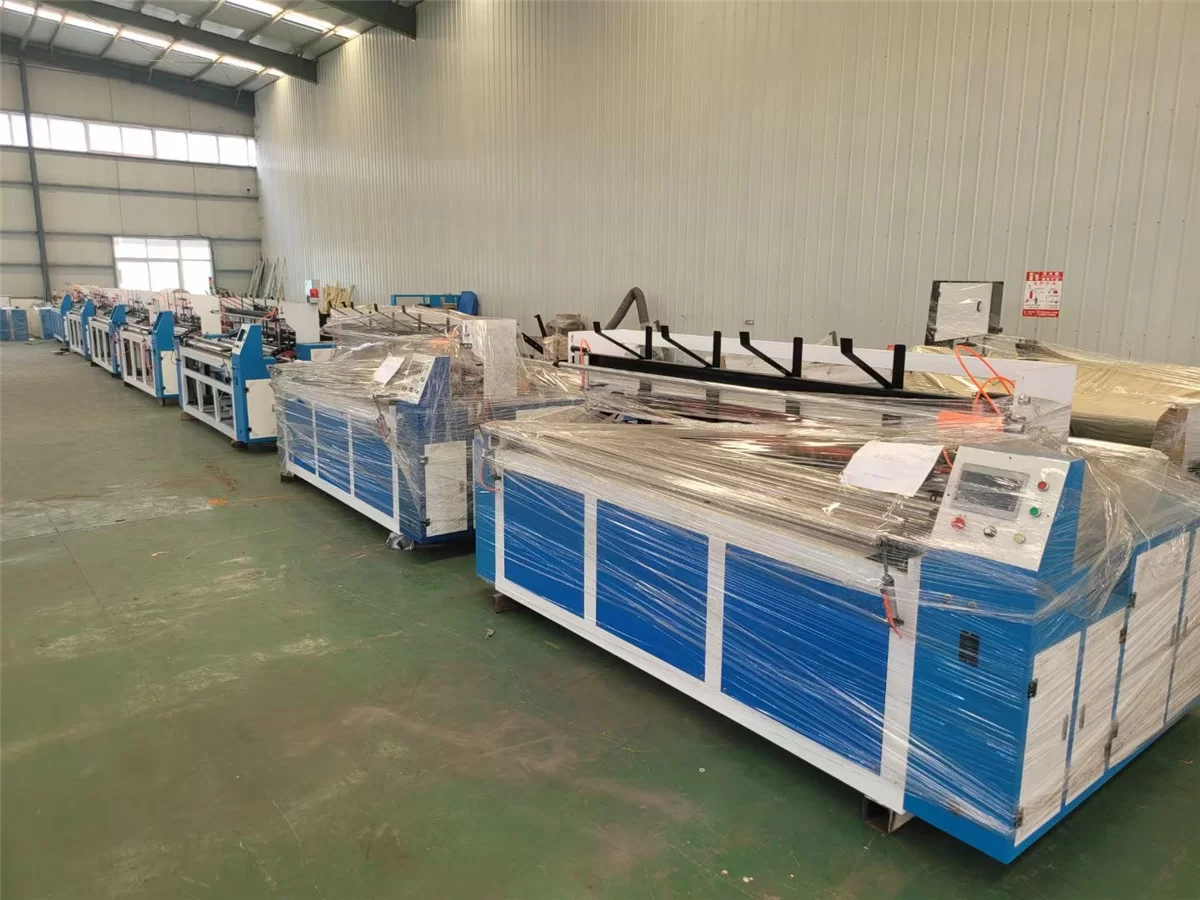
An automatic toilet paper log saw recently completed a factory cutting test before delivery preparation. The test focused on the feeding sequence, log positioning, clamping, blade movement, cutting length and product discharge.
A log saw is used after the rewinding process. The toilet paper rewinder produces a long paper log, which must then be cut into individual rolls according to the required finished-roll width.
Inspection Before Paper Logs Are Loaded
Before material cutting begins, the blade area, conveyor, clamping mechanism, sensors, guards and electrical controls are inspected.
The machine is first operated without paper logs. This allows the team to check the movement sequence without introducing material into the cutting area.
The infeed conveyor should move in the correct direction, the positioning system should respond to the control program, and the clamping mechanism should operate at the appropriate stage of the cycle.
The blade movement is also observed during unloaded operation. Safety guards and emergency-stop functions must be checked before material is introduced.
Paper Log Feeding and Positioning
The paper log must enter the cutting area in a stable position. Its diameter, length, density and external condition can influence how it moves through the machine.
During the test, the team observes whether the paper log travels consistently along the infeed conveyor and reaches the expected cutting position.
A log that is too soft, deformed or inconsistent may require different operating settings. The upstream rewinding process therefore has a direct effect on the downstream cutting result.
The diameter accepted by the log saw must match the paper logs produced by the rewinder. This interface should be confirmed before the machines are selected as part of the same production line.
Clamping and Cutting Sequence
Before the blade passes through the log, the paper must be held securely. The clamping system helps reduce unwanted movement during cutting.
The test checks the timing between log positioning, clamping, blade movement and discharge. An incorrect sequence can affect cut consistency or interrupt the automatic cycle.
The cutting length is set according to the required finished roll. Several rolls are normally checked during the test rather than relying on one sample.
The final roll width may also be influenced by the operating setup and the condition of the paper log. Customers should provide the target roll dimensions before the machine is prepared.
Evaluating the Cut Surface
The cut surface is inspected after repeated operating cycles. A clean and consistent cut is important for product appearance and subsequent packing.
Cut quality can be affected by:
Blade condition
Paper softness
Paper basis weight
Number of plies
Paper log density
Finished-roll diameter
Clamping pressure
Cutting settings
A poor cut should not automatically be attributed to one component. The complete relationship between the blade, material, paper log and machine adjustment must be considered.
Product Discharge and Packing Connection
After cutting, individual toilet rolls leave the cutting area and proceed to the next operation.
Depending on the factory configuration, the rolls may be collected manually, transferred to an individual packing machine or conveyed toward a connected packaging section.
When the log saw is intended to work with automatic packing equipment, the discharge height, roll orientation, transfer method and operating rhythm need to be reviewed.
The cutting machine and packing machine should not be selected independently if the customer expects a connected automatic process.
What Buyers Should Confirm
Before choosing an automatic toilet paper log saw, customers should provide:
Paper log diameter
Paper log length
Finished-roll width
Required cutting range
Expected product format
Upstream rewinder information
Downstream packing method
Available workshop dimensions
A log saw can reduce manual cutting and support a more consistent workflow, but practical performance depends on the upstream paper log and downstream handling process. This factory test is therefore used to verify the cutting sequence under the material and settings selected for the inspection.
Published by
Zhengzhou Renix Machinery Co., Ltd.
This update is prepared from company production, inspection, testing or delivery records. Equipment details should be read together with the confirmed project configuration.
Copyright © Zhengzhou Renix Machinery Co., Ltd.. Original text and photographs may not be reproduced for commercial use without written permission. Quotations must identify the source and link to the original page.