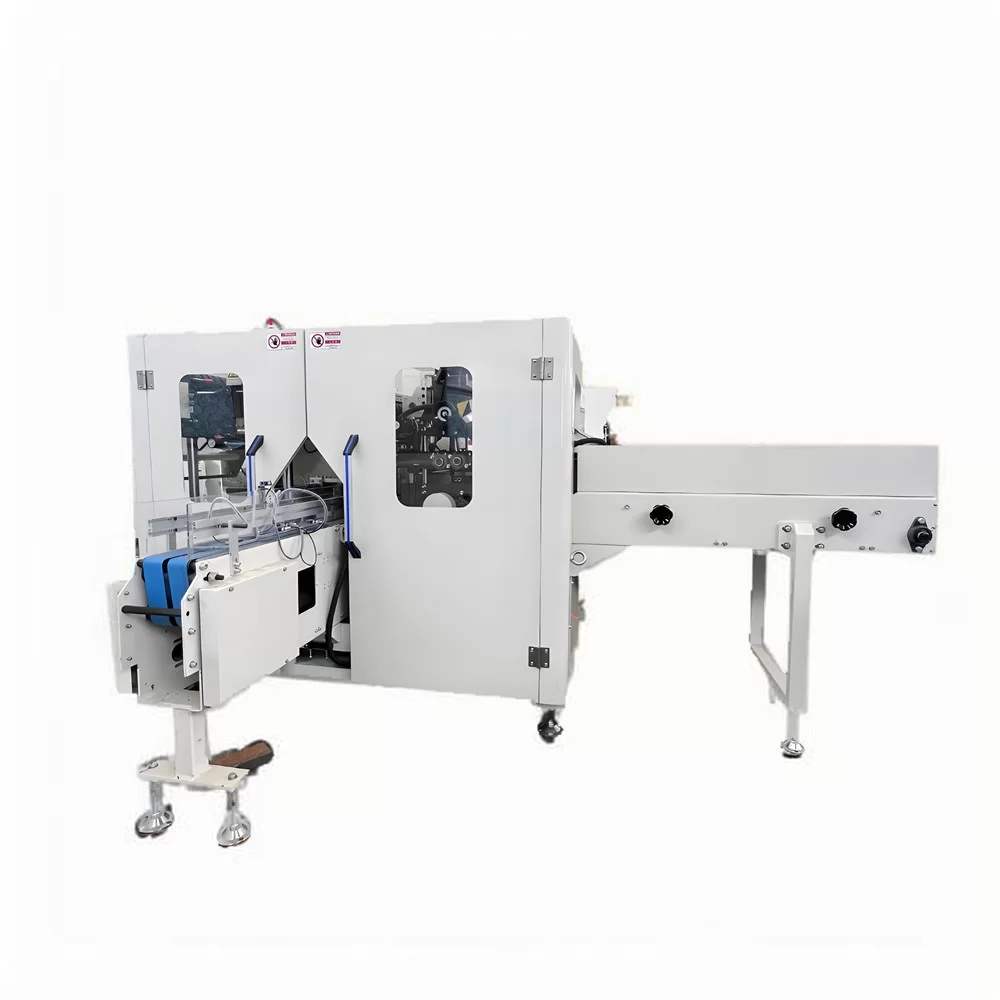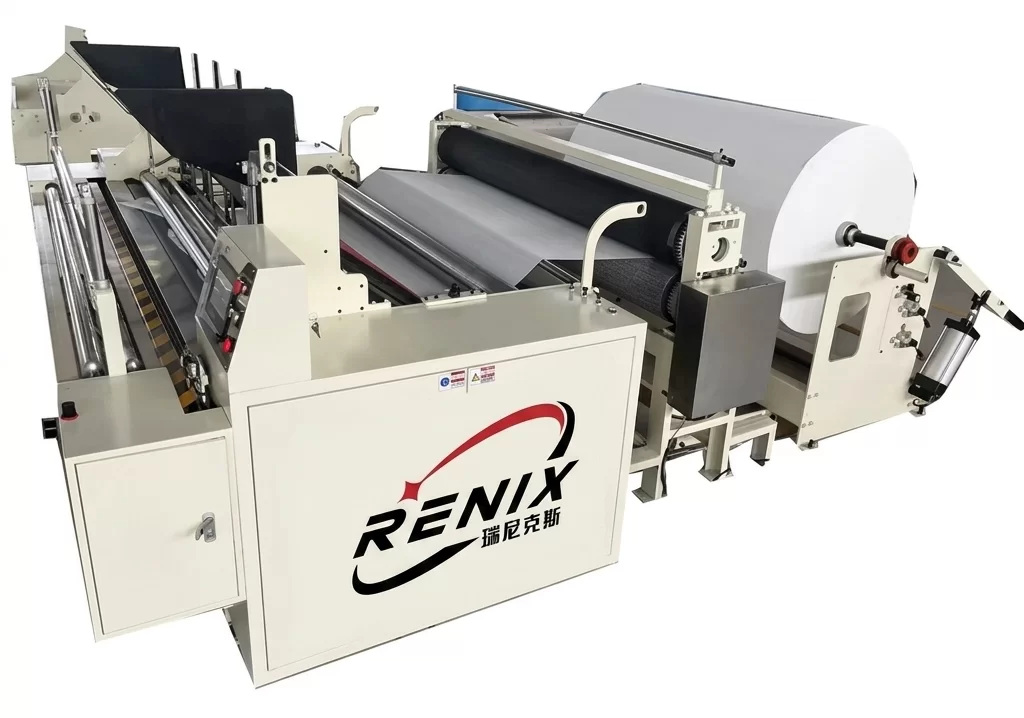
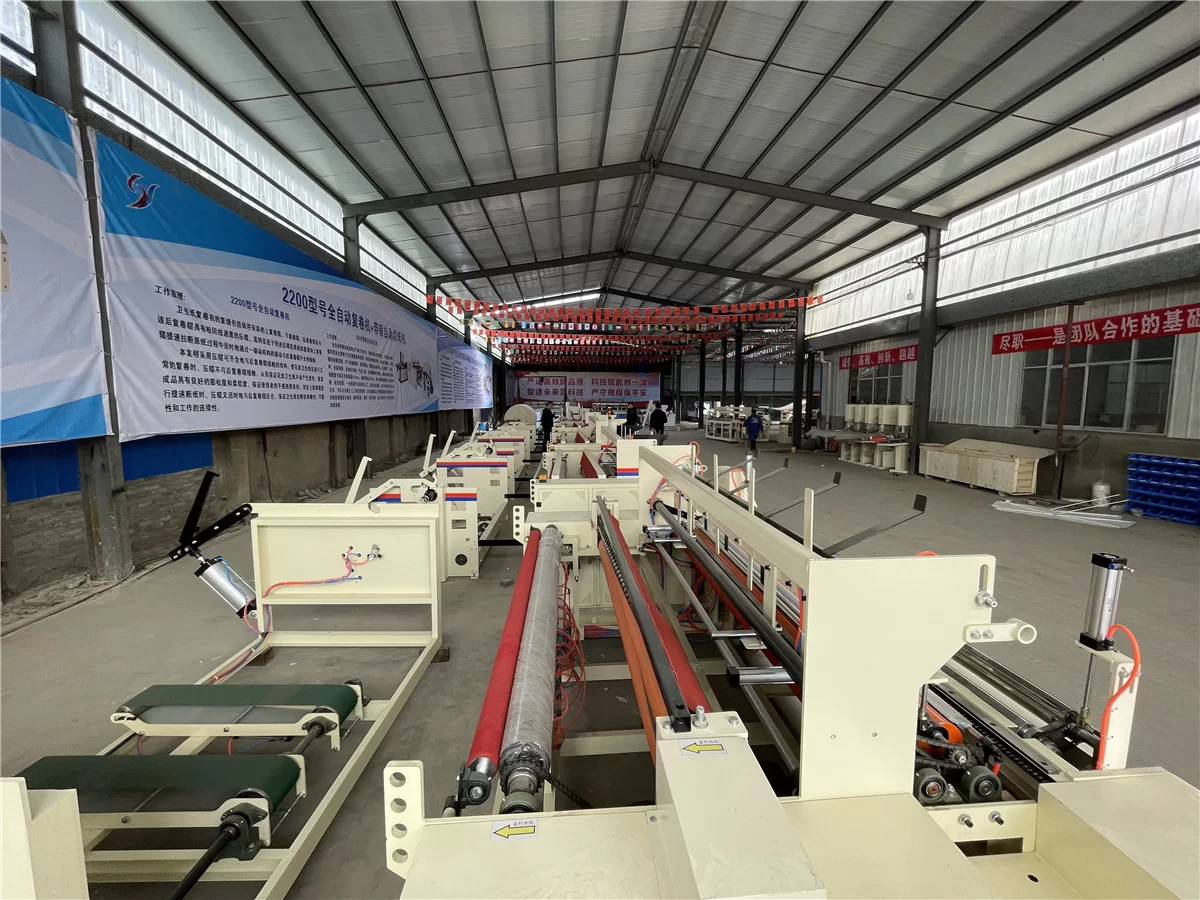
A facial tissue folding machine recently underwent a factory trial run to check paper feeding, folding accuracy, sheet counting and tissue log formation.
Unlike an unloaded movement test, a material trial evaluates how the machine handles actual tissue paper. Raw-material properties can affect web tension, folding stability, product appearance and the condition of the discharged tissue log.
Preparation Before the Trial Run
Before paper was installed, the operating team inspected the folding components, paper paths, vacuum connections, transmission parts, lubrication points and electrical controls.
The raw-material positions were then arranged according to the planned number of plies and web-feeding sequence. Each paper web must travel through the correct path before entering the folding section.
Paper rolls that are not aligned properly at the unwind stage can create problems further along the process. The team therefore observes roll positioning, web tracking and tension before increasing the operating speed.
Paper Feeding and Web Alignment
During the trial, the paper webs are guided toward the folding section. The operating team observes whether the webs remain aligned and whether the paper runs without unnecessary wrinkles or edge deviation.
Facial tissue paper is relatively light and sensitive to tension changes. Excessive tension may stretch or damage the material, while insufficient control can affect folding consistency.
The test does not rely on one fixed setting for every type of paper. Adjustments may be required according to the paper basis weight, ply structure, softness and roll condition.
Folding and Overlap Inspection
The folding section forms the interfolded structure that allows the next sheet to rise when one sheet is removed from the pack.
During the trial run, the overlap between sheets is checked for consistency. Incorrect folding or unstable overlap may affect dispensing performance after the tissue is packed.
The team also inspects edge alignment and the general appearance of the folded product. The objective is not simply to make the machine run, but to confirm that the folding process produces a suitable tissue log for the next production stage.
Counting and Tissue Log Formation
The counting system determines the number of sheets or the length of the tissue log according to the selected operating method.
During the trial, the counting response is monitored together with the discharge sequence. The finished tissue log should maintain a consistent form so that it can proceed to cutting without unnecessary manual reshaping.
The required log length depends on the downstream cutting machine and finished pack dimensions. A folding machine therefore must be considered together with the log saw and packing equipment when planning a connected production line.
Vacuum System and Production Stability
Vacuum is an important part of many facial tissue folding processes. The vacuum system helps control the paper during folding and supports stable sheet formation.
The inspection covers vacuum connections, operating response and the relationship between vacuum performance and paper movement. The correct setting may vary according to the raw material and machine configuration.
Continuous operation is observed to determine whether paper feeding, folding and discharge remain stable over repeated cycles. A short successful movement does not by itself represent practical production performance.
Connection with Cutting and Packing Equipment
After folding, tissue logs normally proceed to a facial tissue log saw. The cut tissue stacks are then transferred to soft pack tissue packing equipment, bottom-draw tissue packing equipment or another packaging process.
The automation level depends on the project. A semi-automatic configuration may require operators to transfer tissue logs or cut stacks. A more automated line may connect folding, cutting and packing with conveyors and control interfaces.
Customers should therefore confirm:
Finished sheet length and width
Number of plies
Sheets per pack
Soft pack or bottom-draw format
Raw-material width
Required packing quantity
Preferred automation level
Available workshop space
This trial run provides a practical reference for subsequent adjustment and equipment matching. Final settings should always be based on the actual material and finished-product requirements used for the project.
Published by
Zhengzhou Renix Machinery Co., Ltd.
This update is prepared from company production, inspection, testing or delivery records. Equipment details should be read together with the confirmed project configuration.
Copyright © Zhengzhou Renix Machinery Co., Ltd.. Original text and photographs may not be reproduced for commercial use without written permission. Quotations must identify the source and link to the original page.