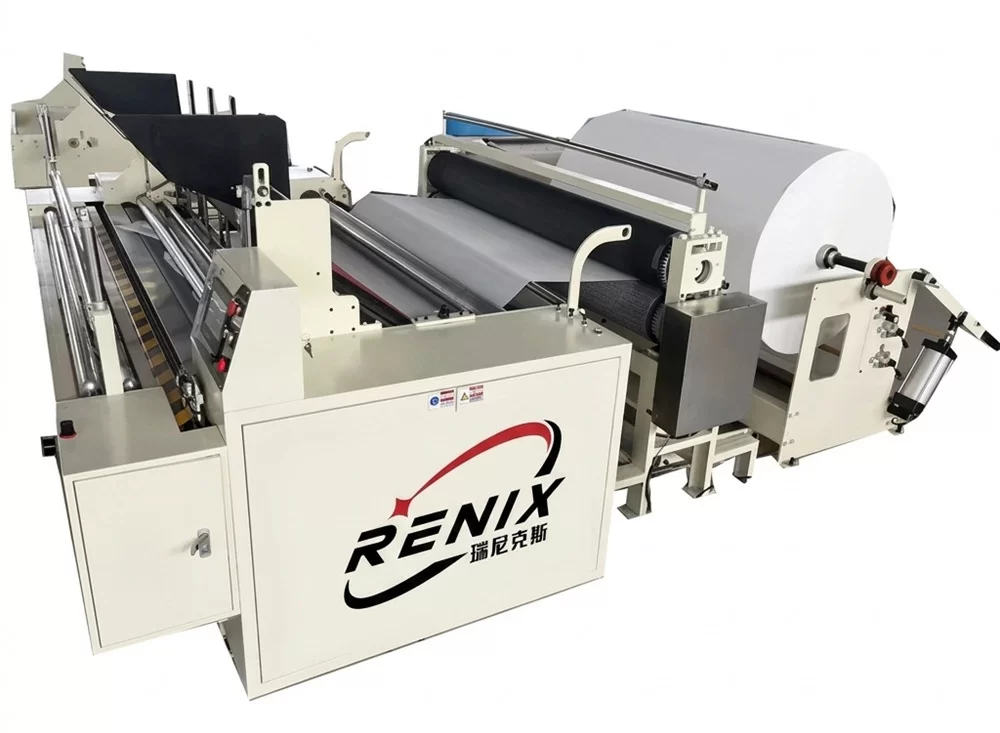
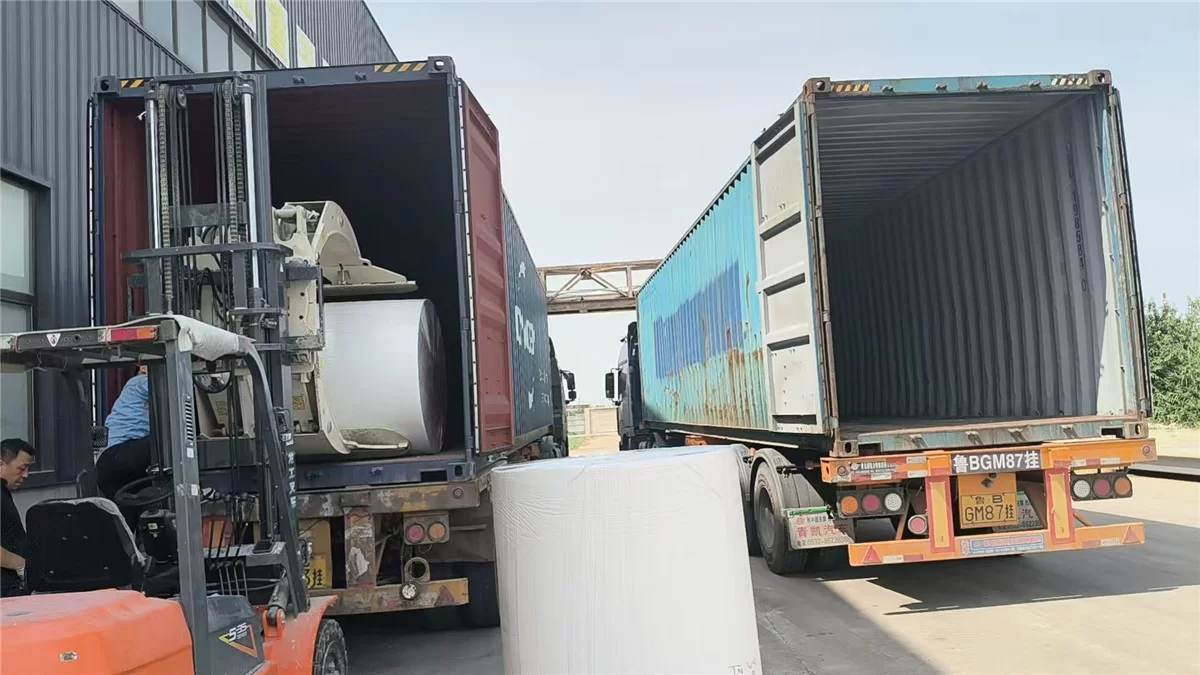
A toilet paper rewinding machine recently entered the packing and container-loading stage after the required factory preparation was completed.
The shipment included the equipment and supporting items confirmed for the project. Before loading began, the team reviewed the shipping scope, machine dimensions, handling requirements and available container space.
Equipment Check Before Packing
The machine was inspected before protective materials were applied. This check is intended to ensure that accessories, removable components and external connections are properly prepared for transport.
The operating area, control components, exposed sensors, pneumatic connections and movable sections were reviewed. Components that could shift during transport were secured or prepared separately where necessary.
The packing list was checked against the agreed equipment scope. Separately packed accessories should be organized so that they can be identified after the container reaches its destination.
Protecting the Main Machine
The required protection depends on the machine structure and delivery method. Exposed areas may need additional covering, while sensitive components should be protected from direct contact during handling.
The control cabinet and operating panel require particular attention. External impact or pressure on these areas should be avoided during loading.
Protruding parts and connection points are inspected to determine whether they should remain installed or be packed separately. Any removed item should be clearly associated with the correct machine section.
The objective is not to cover the equipment without a plan. Protective materials must be applied in a way that supports transport while allowing the customer to identify and remove them during installation.
Organizing Accessories and Spare Parts
Accessories, tools, optional parts and agreed spare parts are checked before loading.
Small components can be difficult to locate if they are placed loosely around the machine. The shipment is therefore organized according to the packing list and the installation sequence where practical.
If components are packed in separate boxes, the customer should compare the package markings with the packing list before installation starts.
Documents and electrical information should also be stored in a protected location rather than placed where they may be damaged during unloading.
Planning the Container-Loading Sequence
The loading team reviews the dimensions and approximate position of each item before moving the main equipment into the container.
The main machine is generally positioned first according to available space, handling access and equipment structure. Supporting packages are then arranged around the principal equipment without placing unnecessary pressure on exposed components.
The center of gravity and lifting positions must be considered during movement. Forklift or lifting operations should follow the prepared handling method.
After the equipment enters the container, the surrounding clearance is inspected. The team also confirms that access remains available for placing and securing additional packages.
Securing the Equipment
Once the main machine and accessories are in their planned positions, the equipment is secured to reduce movement during transport.
The required securing method depends on the container, equipment size, base structure and delivery route. The loading team checks the machine position before the final securing work is completed.
The container is not closed immediately after the final item is loaded. The packing list and loading arrangement are reviewed again so that missing packages or unsafe contact points can be identified.
Checks After the Equipment Arrives
After receiving the container, the customer should inspect the external condition before moving the machine.
The delivered packages should be compared with the packing list. Any visible damage or missing item should be recorded before installation begins.
The customer should also confirm the unloading route, lifting capacity, factory entrance dimensions and final equipment position in advance.
A toilet paper rewinding machine may later be connected to a log saw, band saw, individual roll packing machine or bundling machine. Sufficient installation and operating space should therefore be prepared according to the confirmed project configuration.
Published by
Zhengzhou Renix Machinery Co., Ltd.
This update is prepared from company production, inspection, testing or delivery records. Equipment details should be read together with the confirmed project configuration.
Copyright © Zhengzhou Renix Machinery Co., Ltd.. Original text and photographs may not be reproduced for commercial use without written permission. Quotations must identify the source and link to the original page.