
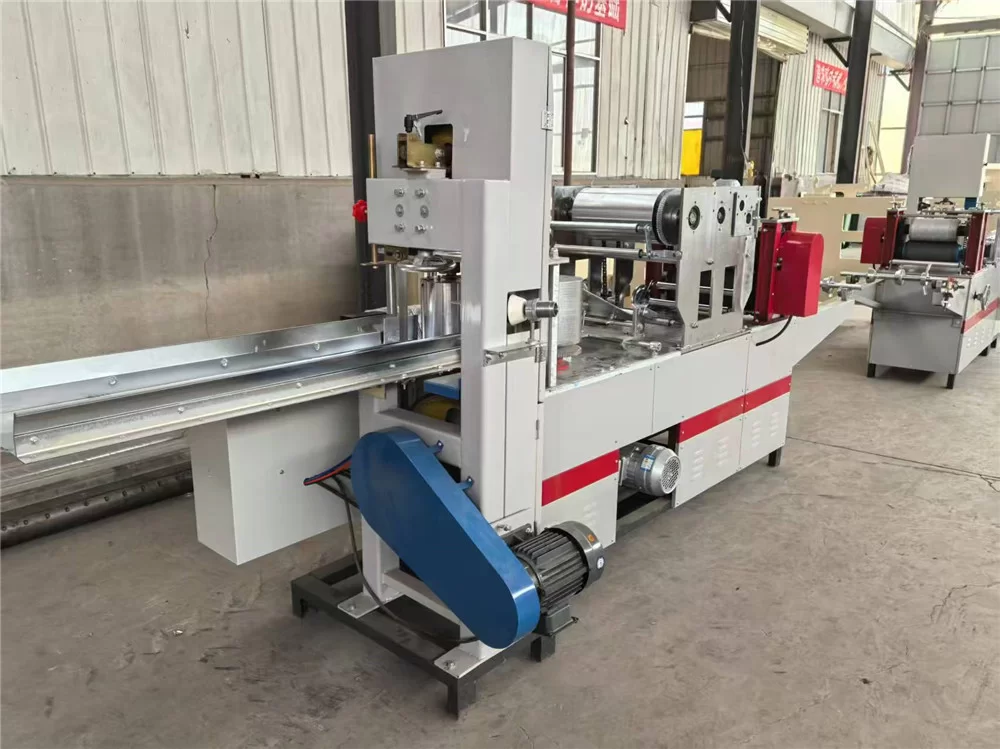
Requirements, materials and converting route
Use the application requirements to identify suitable raw materials, production steps, equipment and packaging before a machine configuration is finalized.
Application Requirements
Suitable Raw Materials
Converting Process
Suitable Equipment
Packaging and Supply Formats
Key Quality Requirements
Product use and production considerations
Selecting the Paper Napkin Machine
The paper napkin machine should be selected according to the complete product range that the factory plans to manufacture. Machine speed is important, but the supported napkin dimensions, folding arrangement, printing system, embossing width and product changeover requirements are equally important.
The main selection factors include:
Jumbo roll width and diameter
Finished napkin dimensions
Unfolded and folded sizes
Folding arrangement
Number of plies
Paper basis weight
Number of printing colors
Embossing type and effective width
Sheets per stack or pack
Target production capacity
Required packaging method
A machine may support several napkin sizes, but changing the finished dimensions, printing pattern or folding arrangement can require mechanical adjustment, replacement parts and new operating settings. The expected product range and changeover frequency should therefore be reviewed before the machine is manufactured.
If the factory mainly produces one standard napkin in large quantities, a dedicated configuration may provide a simpler operating process. If the factory serves restaurants, wholesalers and private-label customers with different specifications, a more flexible machine and a clear changeover procedure may be more practical.
Counting and Finished Stack Control
After printing, embossing and folding, the finished napkins must be counted and discharged in an orderly stack. The stack quantity should match the inner packaging requirement.
Important points include:
Consistent sheet count
Stable folded dimensions
Aligned sheet edges
Orderly stack discharge
Controlled stack height
Easy transfer to the packing section
An incorrect sheet count can affect both customer acceptance and packaging dimensions. An unstable stack can become difficult to place into bags or boxes and may require additional manual arrangement.
If automatic packing equipment is included, the discharge direction, stack dimensions and feeding rhythm must match the packing machine. The napkin machine and packing equipment should therefore be reviewed as connected production stages rather than purchased independently.
Packaging Options for Food-Service Napkins
Restaurant napkins may be supplied directly to restaurants, through distributors or through a central warehouse serving several outlets. The packaging format should match the distribution method and the way restaurant staff replenish the product.
Common packaging and supply formats include:
Counted napkin stacks in plastic bags
Printed retail packs
Dispenser refill packs
Boxed napkins
Individually wrapped napkins
Bulk inner bags
Outer cartons for wholesale supply
Restaurant chains may prefer standardized inner packs that can be moved directly from storage to the dining or service area. Wholesalers may require printed retail packages in several quantities. Catering businesses may prioritize compact packs that are easy to transport and distribute at temporary locations.
The inner package should protect the napkins from dust, moisture, compression and unnecessary handling. Outer cartons should maintain the stack shape during storage and transportation without applying excessive pressure to the finished packs.
Manual and Automatic Packing
The suitable packing method depends on production volume, pack quantity and the number of formats being produced.
Manual or semi-automatic packing may be practical when:
Production volume is moderate
The factory changes pack quantities frequently
Several customized products are produced
Labor is available for stack arrangement and bag loading
The initial packing investment needs to remain controlled
Automatic packing may be more suitable when:
The napkin dimensions remain stable
Pack quantities are standardized
Production volume is relatively high
Printed packing material has consistent specifications
The factory needs to reduce repetitive manual work
Automatic packing does not eliminate all operator work. Packing-film replacement, material replenishment, product inspection, changeover, fault handling and secondary carton packing may still require personnel.
Private-Label Napkin Production
Private-label production can involve customized printing, embossing, napkin dimensions, pack quantities and outer packaging. These requirements should be confirmed before the machine and printing system are selected.
A private-label project may need:
Customer-approved printing artwork
Defined printing colors
Custom embossing rollers
Specified folded dimensions
Private-label inner packaging
Batch identification
Customized outer cartons
The artwork should be reviewed together with the folding position. A design placed correctly on the flat paper web may move to an unexpected position after longitudinal and cross folding.
Trial samples should be checked before continuous production. Particular attention should be given to print alignment, color appearance, folding position, embossing clarity and the visible surface of the finished napkin.
Product Changeover
Factories serving different restaurants or distributors may need to change product specifications regularly. Each changeover reduces available production time and requires a new product inspection.
A changeover may involve:
Changing the paper grade
Adjusting the napkin dimensions
Changing the folding arrangement
Replacing printing plates
Changing ink colors
Adjusting embossing pressure
Replacing embossing rollers
Changing the sheet count
Changing bags, boxes or cartons
Products with similar dimensions and printing requirements can be grouped into planned production batches to reduce changeover frequency.
Machine settings should be recorded after an acceptable product is achieved. These records can help operators restore the settings when the same order is produced again.
Quality Checks During Production
The first finished products should be inspected whenever the raw material, printing artwork, napkin dimensions, fold arrangement, embossing or packaging changes.
Routine quality checks may include:
Unfolded sheet dimensions
Finished folded dimensions
Number of plies
Paper basis weight
Printing position and clarity
Ink transfer and drying
Embossing appearance
Fold alignment
Sheet count
Finished stack shape
Inner pack sealing
Outer carton condition
The printing pattern should remain readable after folding. Finished napkins should separate normally and should not remain stuck together because of excessive ink, embossing pressure or paper moisture.
The packaging should keep the napkins clean and maintain the finished stack during storage and delivery. Damaged seals, compressed stacks and incorrect quantities should be identified before the products enter the food-service supply chain.
Workshop and Utility Requirements
The workshop should provide enough space for jumbo roll storage, napkin production, printing-material preparation, finished-stack handling, packaging and carton storage.
The layout should consider:
Jumbo roll delivery and movement
Machine operating access
Printing ink and plate storage
Electrical cabinet access
Packing-material storage
Finished-product collection
Maintenance and cleaning space
Waste paper collection
The customer should confirm the available voltage, frequency, electrical capacity and compressed-air conditions before equipment production. If printing is included, the working area should also support safe ink preparation, cleaning and storage according to the materials being used.
Information Required Before Equipment Selection
A useful inquiry should include an actual napkin sample or a complete product drawing whenever possible. The inquiry should clearly separate the unfolded dimensions from the finished folded dimensions.
Please provide:
Unfolded napkin length and width
Finished folded dimensions
Required fold arrangement
Number of plies
Paper basis weight
Jumbo roll width and diameter
Printing colors and artwork
Embossing pattern
Sheets per inner pack
Inner packs per carton
Required production capacity
Preferred packing method
Available workshop dimensions
Destination power conditions
These details help determine the machine working width, printing units, embossing arrangement, folding structure, counting system and packing method required for the restaurant napkin project.
Choosing Equipment Around the Finished Napkin
The final equipment configuration should be based on the napkin that the restaurant, distributor or private-label customer intends to purchase. A general machine description cannot replace the finished-product specification.
Napkin dimensions, printed design, fold arrangement and packaging are connected decisions. Changing one specification may affect the printing position, folding components, sheet count, stack dimensions and bag or box size.
Confirming these details before equipment production helps reduce unnecessary changes during machine testing and gives the factory a clearer basis for raw material purchasing, operator preparation and packaging planning.
The equipment range on this page is an application reference. Final machine selection should be confirmed from the actual raw material, finished dimensions, target output, packaging format, workshop conditions and local utilities.