
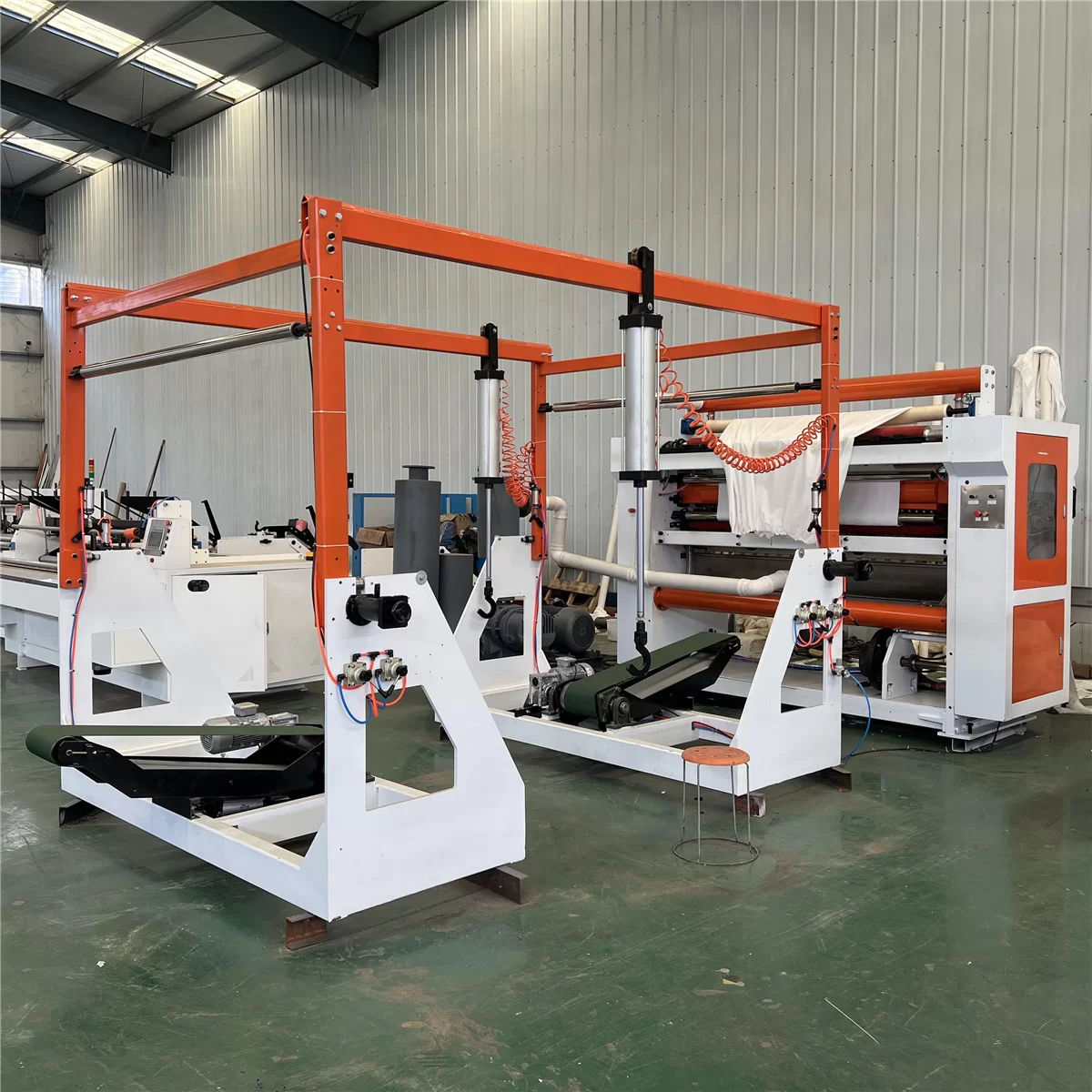
Production Needs, Equipment Recommendation and Automation
The following sections explain what the factory needs, which equipment is recommended, why the setup is suitable and where operators remain necessary.
What the Factory Needs to Produce
Recommended Equipment and Setup
Why We Recommend This Configuration
Automatic and Operator-Assisted Operations
Additional Planning Information
A Practical Starting Point for Toilet Roll Production
A new toilet paper converting factory does not always need to begin with a fully connected automatic production line. The initial equipment scope should reflect the products the factory expects to sell, the available investment, local labor conditions and the volume of confirmed or expected orders.
For many new projects, the first priority is to establish stable rewinding and cutting. These two processes determine whether the factory can consistently produce toilet rolls with the required diameter, width, perforation, core and appearance.
Packing automation can then be selected according to the actual retail formats and production demand. This reduces the risk of purchasing an expensive packing system before the factory has confirmed which pack quantities are most suitable for the local market.
Define the Finished Toilet Roll First
Equipment selection should begin with the finished product rather than the maximum speed shown in a machine quotation.
The customer should confirm:
Finished-roll width
Finished-roll diameter
Core diameter
Number of plies
Paper basis weight
Perforation length
Number of sheets
Embossing requirement
Rolls per retail pack
Expected production volume
These specifications directly affect the rewinding, cutting and packing processes.
For example, increasing the finished-roll diameter changes the amount of paper contained in each log. Changing the roll width affects the log saw setting and the number of individual rolls produced from each paper log. Changing the retail pack quantity affects the counting, grouping, bag dimensions and finished-pack handling.
If the factory plans to produce several roll sizes, the complete specification range should be reviewed before the machines are manufactured.
Toilet Paper Rewinding
The toilet paper rewinding machine converts jumbo tissue rolls into long finished paper logs.
Depending on the confirmed configuration, the machine may perform:
Jumbo roll unwinding
Paper tension adjustment
Multi-ply combination
Embossing
Perforation
Core feeding
Rewinding
Tail handling
Paper log discharge
The practical operating result depends on the jumbo paper, number of plies, finished-roll diameter, embossing method and machine settings. A maximum mechanical speed should not be treated as the expected output for every paper grade and finished product.
Customers should provide available jumbo roll specifications, including width, diameter, basis weight and number of plies. This information helps determine the appropriate working width and unwind configuration.
Cutting the Rewound Logs
After rewinding, the long paper logs must be cut into individual toilet rolls.
An automatic log saw is recommended when the factory requires repeated cutting, more consistent finished-roll dimensions and reduced manual handling.
Cut quality depends on several factors:
Blade condition
Paper softness
Paper log density
Finished-roll diameter
Clamping adjustment
Cutting length
Operating settings
The log saw must accept the diameter and length produced by the rewinder. If automatic packing will be added later, the finished-roll discharge direction and transfer height should also be considered in the initial layout.
Flexible Packing During the Initial Stage
A new factory may need to test several retail pack formats before establishing stable sales.
Possible formats include:
Single-roll packs
Four-roll packs
Six-roll packs
Eight-roll packs
Ten-roll packs
Twelve-roll packs
Larger wholesale bundles
Semi-automatic packing provides flexibility when pack sizes change frequently. Operators can collect and arrange the rolls while the packing equipment completes the selected wrapping, bagging or sealing operation.
When one or two formats become stable and order volume increases, automatic counting, grouping, bag feeding and sealing can be added.
Workshop and Utility Requirements
The proposed workshop should reserve areas for:
Jumbo tissue roll storage
Jumbo roll handling
Rewinding
Paper log transfer
Log cutting
Finished-roll collection
Retail packing
Finished-product storage
Maintenance access
Machine body dimensions alone are not sufficient for layout planning. Additional space is required for jumbo roll replacement, electrical cabinet access, blade maintenance, product transfer and packing-material replenishment.
The factory should also confirm the electrical voltage, frequency, available power and compressed-air conditions before the machines are manufactured.
Preparing for Future Automation
Future automation should be considered during the first layout, even if the initial project uses operator-assisted transfer.
A suitable expansion route may include:
Paper log accumulation
Automatic transfer to the log saw
Finished-roll conveying
Automatic counting and grouping
Multi-roll bag packing
Bundle packing
Case packing
Finished-product conveying
Reserving space and connection directions during the first stage can reduce equipment relocation during a later upgrade.
Information Required for a Configuration
To prepare a suitable toilet paper production solution, the customer should provide:
Jumbo roll specifications
Finished-roll dimensions
Core dimensions
Number of plies
Embossing requirements
Perforation length
Pack quantity
Target output
Workshop dimensions
Local power conditions
Preferred automation level
A finished-product sample, packaging photograph or complete specification sheet can help clarify local market requirements.
The final production solution should be based on these confirmed conditions rather than selected only from a standard equipment list.