
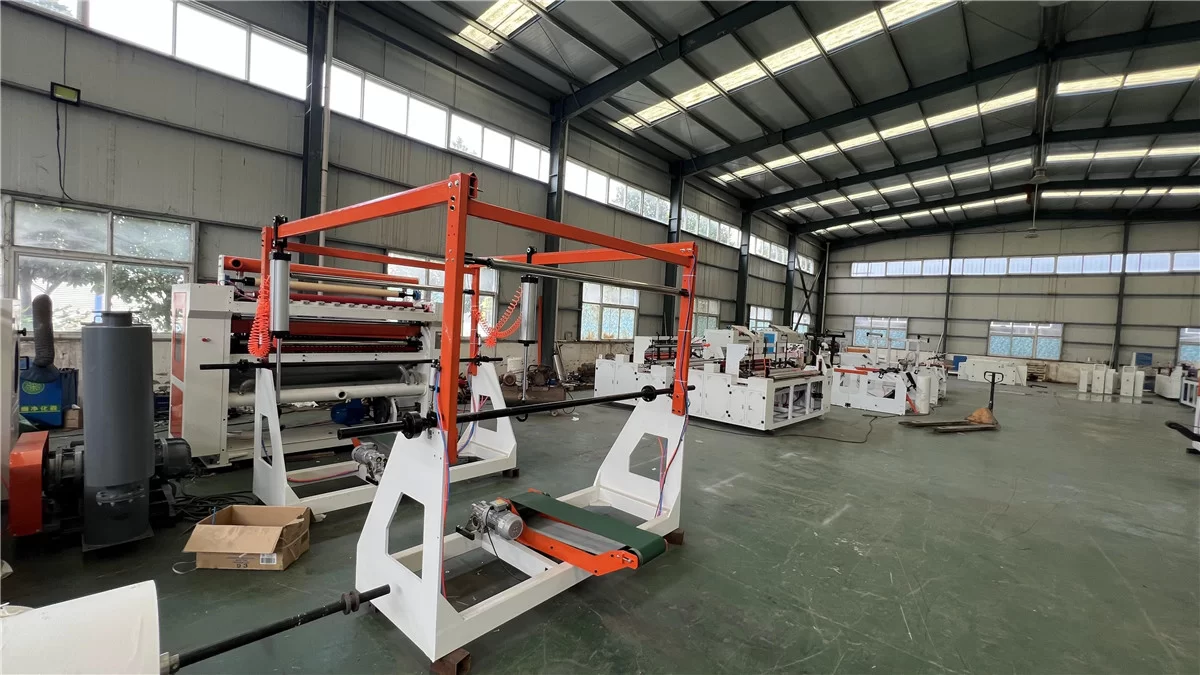
Equipment, factory checks and delivery evidence
The sections and photographs below document the actual work completed for this project.
Project Overview
This customer project covered the factory trial run and delivery preparation of a 2200 toilet paper rewinding machine and the supporting equipment included in the confirmed order. The project was prepared for a tissue converter planning to process jumbo tissue rolls into standard finished toilet rolls.
Before packing, the equipment was assembled and checked at the factory using the available trial material. The test focused on the principal converting operations and the condition of the finished paper logs rather than demonstrating the machine without paper.
The final product settings, production speed and supporting equipment must follow the customer’s approved specifications and the actual project documents.
Equipment Included in the Delivery
The principal equipment in this project was a 2200 toilet paper rewinding machine. Depending on the final order scope, the delivered equipment may also include matching log cutting machinery, electrical components, operating accessories, spare parts and tools.
2200 toilet paper rewinding machine
Matching toilet paper log cutting equipment, where included
Electrical control components included in the confirmed configuration
Operating accessories and installation parts
Confirmed spare parts and maintenance tools
Technical documents included in the delivery scope
All loose accessories should be checked against the packing list before the equipment is sealed and loaded. Parts packed separately should be clearly marked to simplify inspection after arrival.
Factory Trial Run
The trial run began after the mechanical assembly, electrical connections and principal machine adjustments had been completed. Jumbo tissue rolls were installed on the unwind stands, and the paper webs were threaded through the relevant converting sections.
The trial process covered the following operations:
Jumbo tissue roll unwinding
Paper web guidance and alignment
Multi-ply paper combination
Embossing according to the installed configuration
Sheet perforation
Core feeding where included
Toilet paper rewinding
Paper log formation
Finished paper log discharge
The initial operating settings were adjusted according to the prepared raw material and target roll specification. A change in paper basis weight, tensile strength, softness, number of plies or moisture condition may require further adjustment during normal production.
Finished-Product Inspection
Finished samples were collected during the trial run and checked before the equipment entered the packing stage. The inspection focused on whether the machine could repeatedly form paper logs suitable for the next cutting process.
The main inspection points included:
Paper web alignment
Embossing appearance
Perforation position and tear performance
Paper log diameter
Core position where cardboard tubes were used
Winding density
Paper log surface condition
Tail condition and log discharge
The trial samples provided a reference for the prepared paper and machine settings. They should not be treated as a universal output guarantee for every tissue grade or finished-roll specification.
Operating Parameters and Production Conditions
The practical output of a toilet paper rewinding project depends on more than the displayed mechanical speed. Finished-roll diameter, sheets per roll, number of plies, paper condition, embossing method, cutting capacity and packing format all influence the complete production result.
During commissioning, the production team should record:
Raw-material specification
Paper tension settings
Embossing pressure
Perforation length
Preset rewind diameter or paper length
Core specification
Stable operating speed
Finished-product inspection results
These records provide a useful starting point when the same product is manufactured again after installation.
Inspection Before Packing
After completion of the trial run, the equipment was stopped and prepared for the delivery inspection. Accessible areas were cleaned, loose parts were organized and the main machine sections were checked before protective packing began.
The pre-packing inspection covered:
Main machine structure
Electrical cabinets and control components
Motors, drives and transmission components
Embossing and perforating sections
Unwind stands and paper-guiding components
Guards and safety-related assemblies
Loose accessories
Spare parts and operating tools
Components requiring separate transportation protection were removed or secured according to the equipment structure and loading arrangement.
Protective Packing
The machine was prepared to reduce the risk of dust, moisture, movement and surface damage during inland transportation and international shipment. The actual packing method should match the equipment size, transport route and agreed project scope.
Protective work may include:
Cleaning exposed machine surfaces
Applying suitable protection to selected metal parts
Securing movable components
Protecting electrical cabinets and control panels
Wrapping machine sections with protective material
Marking lifting and handling positions
Packing accessories in labeled boxes
Preparing the final packing list
Accessory boxes and separately packed components should use clear identification that corresponds with the packing documents.
Loading Preparation
Before loading, the equipment arrangement was reviewed according to the available transport space and machine dimensions. Heavy machine sections should be positioned to maintain stable weight distribution, while accessories should be protected from movement during transportation.
The loading process should consider:
Machine weight and dimensions
Permitted lifting positions
Container or transport-vehicle dimensions
Weight distribution
Securing points
Protection between machine sections
Accessory-box placement
Unloading conditions at the destination
Loading photographs and packing records can support the delivery documentation and help the receiving team understand the equipment arrangement before unloading.
Documents and Delivery Scope
The documents supplied with a project should follow the confirmed contract and equipment configuration. The final delivery package may include:
Equipment packing list
Machine operating instructions
Electrical drawings
Confirmed spare-parts list
Machine inspection records
Factory trial photographs or video
Layout or installation reference, where included
The customer should review the delivery scope before shipment and identify any documents required for installation, local customs clearance or internal factory records.
Project Result
The factory trial run completed the planned checks for paper feeding, embossing, perforation, core feeding, rewinding, paper log formation and log discharge under the prepared test conditions. Finished samples were inspected before the machine was cleaned and prepared for packing.
The project then moved to accessory verification, protective packing and loading preparation. Final production performance should be confirmed after installation using the customer’s regular raw material, finished-product specification and normal operating team.
Information Required for a Similar Project
Customers planning a similar toilet paper converting project should provide:
Jumbo roll width and diameter
Paper basis weight and number of plies
Finished-roll width and diameter
Core diameter or coreless requirement
Perforation length
Embossing requirement
Target production output
Rolls per retail pack
Preferred cutting and packing method
Workshop dimensions
Destination voltage and frequency
A finished toilet roll sample or complete product specification makes it easier to review the rewinding, cutting and packing equipment as one production process.
``