
Product Definition and Equipment Matching
This section explains how the finished product specifications affect rewinding, folding, cutting, embossing and packaging equipment selection.
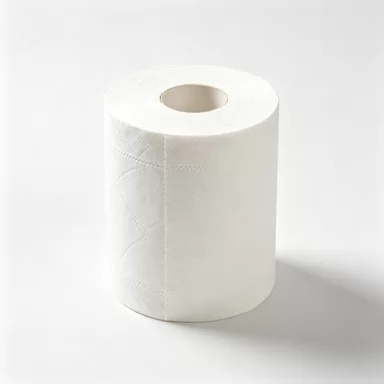
The coreless toilet paper roll eliminates the conventional cardboard tube while maintaining a stable central opening. This finished format reduces core material consumption and allows more rolls to be loaded into the same carton or storage space.
The example product uses three plies with a basis weight of 13–16 gsm per ply. Its finished width is approximately 95 mm, while the roll diameter can be controlled between 95 and 115 mm. Actual specifications can be adjusted according to the required number of sheets, winding tightness and target retail pack.
Because no cardboard core is used, the rewinding unit must form a stable center during the initial winding stage. The finished roll should be firm enough for automatic cutting and packing without becoming excessively tight or reducing softness.
Laminated embossing can bond the plies together and create a more distinctive surface pattern. This configuration is suitable for products that require improved appearance, bulk and ply stability. The embossing roller pattern can be manufactured according to an approved drawing or finished-product sample.
Coreless Rewinding Requirements
A coreless toilet paper rewinding machine differs from a conventional core-fed rewinder in the way the roll center is formed. The machine must control the initial winding position, paper tension and finished log density to produce a consistent central opening.
The parent roll condition also affects the result. Paper moisture, basis weight consistency, ply alignment and reel tension should be checked before production. Stable parent paper helps reduce loose edges, telescoping and inconsistent roll diameters.
After rewinding, the coreless tissue logs are transferred to a log saw. Cutting parameters must match the finished roll width and paper softness to reduce deformation. Sharp blades, suitable blade speed and reliable log clamping are important when processing soft coreless rolls.
Packaging Configuration
Coreless toilet paper rolls are commonly packed in multi-roll groups using plastic film or shrink wrapping. Possible configurations include 6, 10, 12, 18 and 24 rolls per pack.
The packaging machine should be selected according to roll diameter, pack arrangement, film type and sealing method. If multiple pack configurations are required, changeover parts and adjustable counting settings should be included in the project scope.
Suitable Equipment
A typical production line includes a coreless toilet paper rewinding machine, accumulator or conveying section, log saw cutting machine and automatic packing machine. The exact automation level depends on the required output, labor conditions and available factory space.