
Product Definition and Equipment Matching
This section explains how the finished product specifications affect rewinding, folding, cutting, embossing and packaging equipment selection.
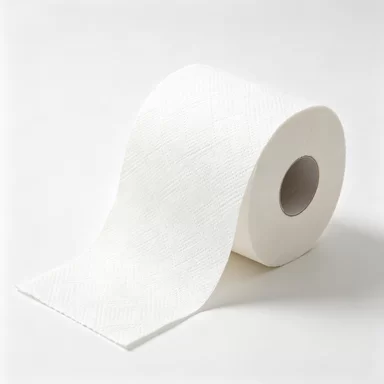
Kitchen towel rolls are designed for wiping, drying and absorbing liquids in household and commercial environments. Compared with standard toilet tissue, kitchen towel paper normally has a higher basis weight, larger sheet dimensions and more pronounced embossing.
This example uses two plies with a basis weight of 18–24 gsm per ply. The finished sheet size is approximately 220 mm × 230 mm, and the roll diameter can be adjusted from 110 to 140 mm. A paper core with a diameter of 40–50 mm provides support during rewinding, cutting and packaging.
The exact finished size should be determined before machine configuration. Sheet width is related to the parent roll width and slitting arrangement, while sheet length is controlled by the perforation system. The number of sheets and winding tightness influence the final roll diameter.
Embossing and Lamination
Point-to-point laminated embossing is commonly selected for kitchen towel production. The embossing pattern increases the apparent bulk of the sheet and creates channels that support liquid absorption.
Lamination helps maintain ply alignment and improves the visual definition of the embossed pattern. Glue application, roller pressure and pattern registration must be controlled carefully to avoid excessive glue consumption or a stiff finished sheet.
Different embossing patterns may require different embossing rollers. Dot, diamond, wave, flower and custom logo patterns can be developed according to the required product appearance. Before manufacturing custom rollers, the finished pattern drawing and effective embossing width should be confirmed.
Rewinding and Cutting
The kitchen towel rewinding machine handles parent roll unwinding, web tension control, embossing, lamination, perforation and rewinding. Because kitchen towel paper is heavier than ordinary toilet tissue, the machine configuration should match the target basis weight and operating speed.
After rewinding, the logs are cut into individual kitchen towel rolls. The log saw blade, clamping system and feeding speed should be selected to produce clean cut surfaces without compressing or deforming the rolls.
Packaging Options
Kitchen towel rolls can be packed individually or grouped into multi-roll packs. Single-roll packaging is suitable for retail products with a larger roll diameter, while two-roll, four-roll and six-roll packs are commonly used for household distribution.
The packaging method can use bag packaging, flow wrapping or shrink wrapping. Pack configuration should be confirmed together with the finished roll diameter because both specifications affect film width, bag size and conveying layout.