Read the guidance together with the actual finished product, raw material, target output, packaging format and factory conditions. General information does not replace model confirmation.
A buyer does not always need a complete production line. In some projects, one correctly selected machine can solve the immediate production problem. In others, purchasing only the main machine creates additional manual handling and limits the expected output.
The decision should be based on the existing factory, finished product and downstream process rather than the general assumption that a complete line is always better.
When a Single Machine Is Enough
A single machine may be suitable when the factory already has compatible upstream or downstream equipment.
Examples include:
Adding a log saw after an existing toilet paper rewinder
Adding a packing machine to replace manual bagging
Replacing an old facial tissue folder
Adding a napkin machine for a new product category
Installing a second rewinder to increase converting capacity
Before purchasing the machine, check whether the existing equipment can provide or receive the required product.
For example, a new toilet paper log saw must accept the diameter and length of the paper logs produced by the existing rewinder. Its finished-roll discharge must also suit the collection or packing process.
When a Complete Line Is More Practical
A complete line may be appropriate for a new factory or a project requiring connected automatic production.
A toilet paper line may include:
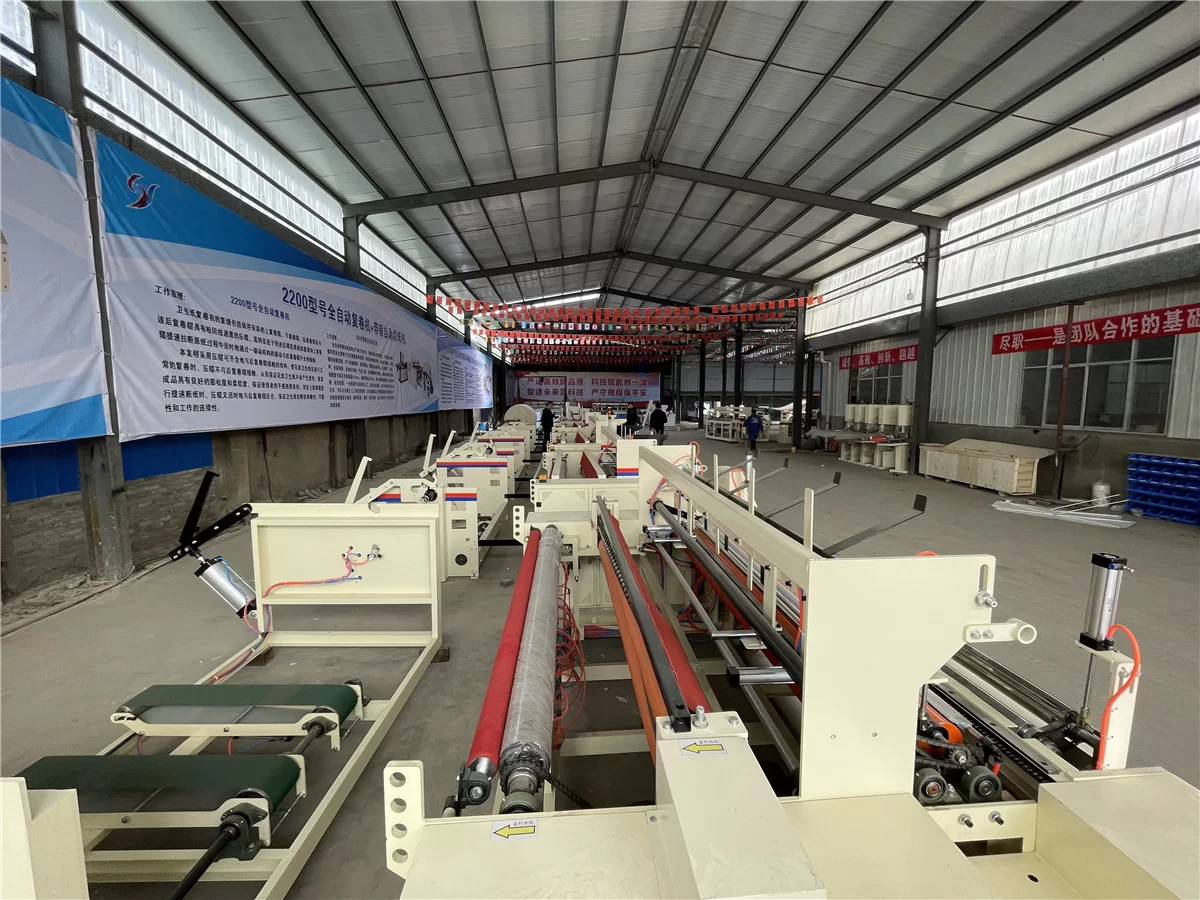
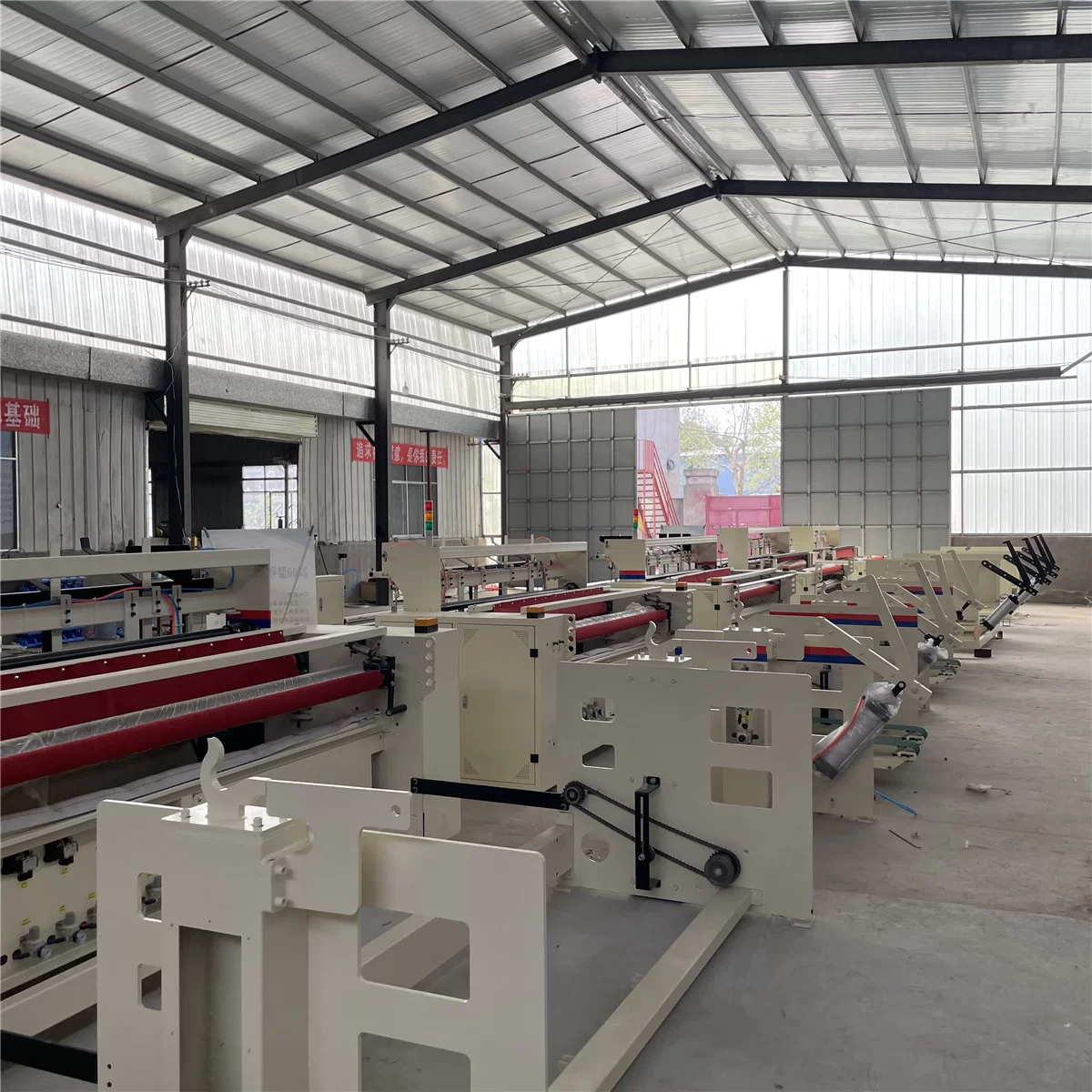
Jumbo roll unwinding and rewinding
Embossing and perforation
Paper log discharge
Automatic log cutting
Finished-roll transfer
Counting and grouping
Retail packing
Secondary packing
A facial tissue line may connect folding, log cutting, stack transfer and soft-pack packaging.
The main advantage is not simply the number of machines. The value comes from matching the product dimensions, production rhythm, transfer direction and control sequence across the complete process.
Review Existing Equipment Carefully
Existing machines should be evaluated objectively before they are included in a new line.
Confirm:
Accepted product dimensions
Practical operating speed
Infeed and discharge height
Product direction
Electrical and control system
Available connection signals
Maintenance condition
Remaining production life
An older machine may continue to perform its original function but may not communicate with new automatic equipment. Additional conveyors, sensors or control modifications may be required.
Compare Manual Transfer with Connected Production
Manual transfer can be flexible and economical for moderate production. Operators can move paper logs, rolls, tissue stacks or packed products between independent machines.
However, manual transfer can also create:
Product accumulation
Additional labor
Inconsistent feeding
Product deformation
Unclear production rhythm
More workshop traffic
Connected production reduces selected handling steps but requires better compatibility between machines. A fault in one stage may also affect the complete line.
The decision should consider both labor and operating flexibility.
Packaging Often Determines the Final Scope
Many projects focus on the converting machine and treat packaging as a later decision. This can lead to an unbalanced line.
Packaging selection depends on:
Finished-product dimensions
Pack quantity
Film, bag or box specification
Printed registration
Retail appearance
Secondary packing
Required packs per minute
A factory may operate the main converting equipment successfully but still be unable to achieve the planned finished-pack output because packing remains slow or inconsistent.
Consider Product Variety
A single machine arrangement can be practical when the factory produces many specifications in smaller batches.
A complete automatic line is easier to justify when:
Product dimensions are stable
Raw materials are consistent
Pack quantities are standardized
Orders are repeatable
Continuous output is required
Frequent changes in roll diameter, sheet size, pack quantity or packaging material increase changeover time. High automation does not remove the need for adjustment.
Calculate the Complete Project Cost
A complete line includes more than the purchase price of the machines.
The project may require:
Electrical installation
Compressed air
Vacuum systems
Conveyors
Workshop modification
Jumbo roll handling
Packing-material storage
Spare parts
Installation and training
Raw material for commissioning
A single-machine project may have a lower initial cost but require more labor and product handling. The comparison should therefore cover both investment and daily operation.
Leave a Practical Upgrade Route
A factory can begin with independent machines and add automation later, but the initial layout should support that plan.
Reserve:
Product-transfer direction
Conveyor space
Packing-machine connection area
Electrical capacity
Control interfaces
Maintenance access
A phased investment plan works best when the first machines can remain in service during later upgrades.
Make the Decision from the Production Gap
Choose a single machine when one defined process is missing and the surrounding equipment is compatible.
Choose a complete line when the factory needs a coordinated process from raw material to finished packaging and has stable specifications to support connected production.
The correct scope is not the largest equipment package. It is the smallest reliable system that meets the present production requirement without blocking realistic future development.
This resource is prepared as practical machinery and production guidance. Technical values should be checked against the confirmed equipment configuration.