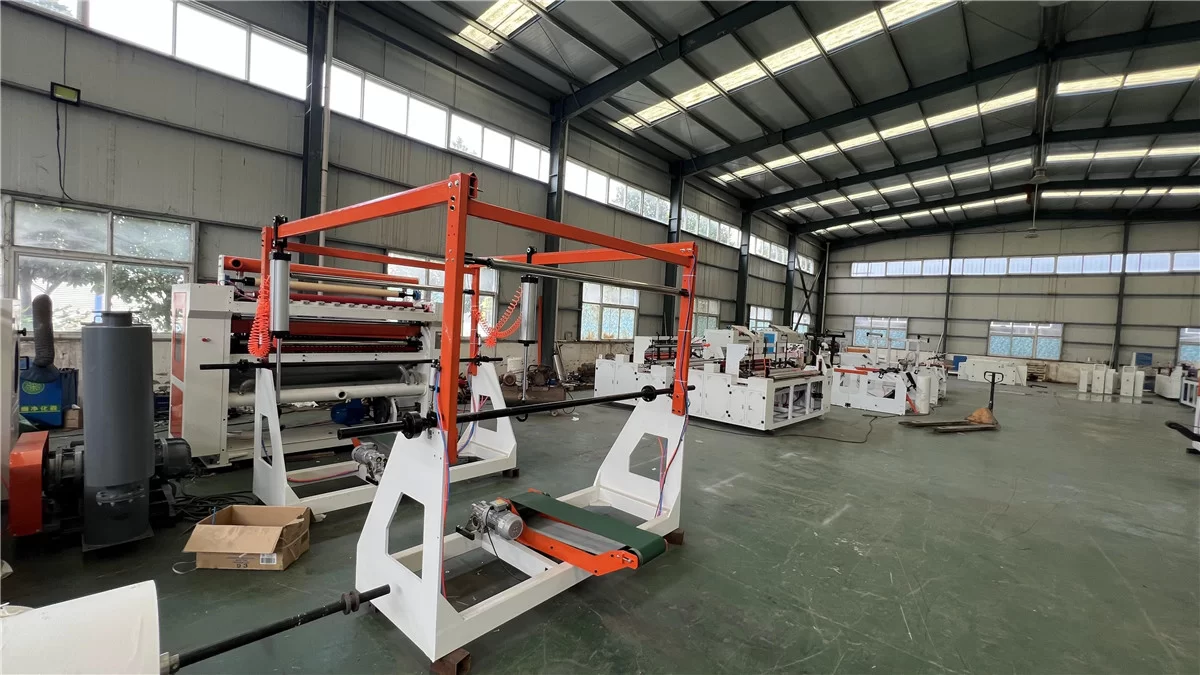
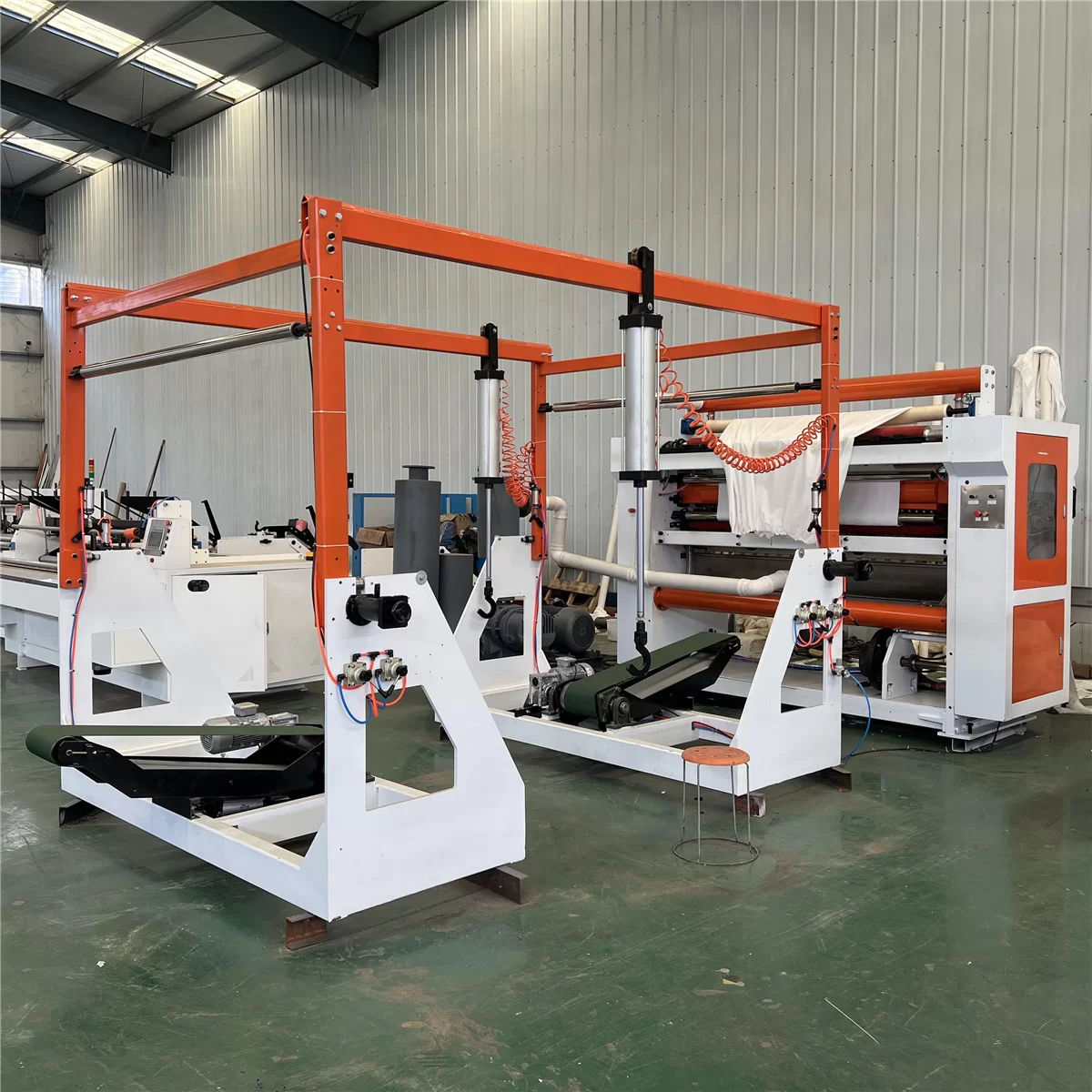
Read the guidance together with the actual finished product, raw material, target output, packaging format and factory conditions. General information does not replace model confirmation.
An automatic tissue production line is not automatically the best choice for every factory. The correct automation level depends on the product range, target output, labor conditions, operating experience and available investment.
A practical comparison should examine the entire process rather than one machine.
What does semi-automatic mean?
A semi-automatic production line normally automates the main converting process while retaining manual work in product transfer, arrangement or packing.
Depending on the product, operators may handle:
Moving logs between machines
Feeding products into a cutter
Arranging rolls before packing
Loading bags or cartons
Collecting finished packs
Removing rejected products
Replacing packing materials
The main machine can still have automatic control, fault alarms and parameter adjustment. “Semi-automatic” does not necessarily mean outdated technology. It describes how the complete production process is connected.
This configuration can be useful for a factory that needs moderate output, flexible product changes or a lower initial investment.
What does automatic mean?
An automatic line connects more production stages through conveyors, transfer systems and synchronized controls.
An automatic toilet paper line may connect:
Rewinding
Log accumulation
Log cutting
Roll transfer
Counting and grouping
Bagging or wrapping
Bundling or case packing
An automatic facial tissue line may connect folding, cutting, transfer and packing with limited manual handling.
However, operators are still required for:
Raw material preparation
Packing material replacement
Quality checks
Changeover
Cleaning
Maintenance
Fault handling
Automation reduces repetitive manual work but does not remove the need for trained personnel.
Chinese image suggestion: Place a connected production line or conveyor transfer image here.
Compare labor by production stage
Instead of asking how many workers the complete line requires, examine each stage.
Prepare a labor table covering:
Raw material loading
Machine operation
Product transfer
Quality inspection
Packing
Carton or bundle handling
Finished product movement
Material replenishment
A semi-automatic line may require more operators during normal production but fewer specialist technicians. A highly automated line may require fewer direct operators while increasing the importance of electrical and control-system knowledge.
Labor cost should therefore include both worker quantity and skill level.
Consider the target output
Automation becomes more valuable when manual handling limits the required output.
For example, installing a high-speed converting machine may not increase finished product output if operators cannot transfer or pack products at the same rate.
The complete line should be balanced. Check the rated and practical capacity of:
Main converting machine
Cutting equipment
Transfer system
Packing machine
Bundling or case packing equipment
A bottleneck in one downstream stage can reduce the value of upstream automation.
If the initial sales volume is uncertain, a modular line may be more practical. The factory can begin with manual or semi-automatic packing and add conveyors or automatic packing equipment after the market develops.
Review the product range
Factories producing one stable product format can often benefit more from automation. The machines can run longer using consistent dimensions, materials and packing specifications.
Automation requires more careful evaluation when the factory frequently changes:
Roll diameter
Sheet count
Core diameter
Pack quantity
Bag size
Carton arrangement
Printed film
Product type
Frequent product changes introduce setup time and change-part requirements. A simpler line can sometimes respond more easily to short orders and varied specifications.
Ask the supplier to demonstrate the changeover procedure, not only the production speed.
Check the packing process carefully
Packing is one of the most important differences between semi-automatic and automatic lines.
Manual or semi-automatic packing offers:
Lower initial cost
Easier adjustment
Flexibility for different pack formats
Simpler maintenance
Automatic packing can offer:
More consistent pack appearance
Reduced repetitive labor
Better connection with upstream machines
Higher continuous output
More stable counting and grouping
The investment decision should consider the local cost and availability of packing labor. It should also consider the quality and consistency of packing film, bags and cartons because automatic equipment usually requires controlled material specifications.
Evaluate maintenance capability
Additional automation means additional:
Sensors
Servo systems
Pneumatic components
Conveyors
Control modules
Safety devices
Communication connections
These components can improve production coordination, but the factory must be able to inspect and maintain them.
Before selecting a highly automated line, confirm:
Whether trained electrical technicians are available
Whether spare parts can be stocked locally
Whether remote technical support is practical
Whether the supplier provides wiring diagrams and manuals
Whether fault messages are clear
Whether individual machines can operate during a downstream fault
A simpler line may be more reliable for a factory with limited technical support, even if it needs more manual work.
Calculate investment beyond the machines
The total project investment may include:
Main machinery
Conveyors and transfer devices
Packing equipment
Compressed air system
Transformer and electrical installation
Workshop preparation
Spare parts
Installation and training
Raw material for testing
Working capital
Finished product storage
Automation can also influence the required workshop length and utility capacity. These costs should be included before comparing the return on investment.
When a semi-automatic line is practical
A semi-automatic configuration may suit a project with:
Limited initial investment
Moderate target output
Several product formats
Available production labor
Short or changing orders
Limited maintenance resources
A phased expansion plan
The key is to ensure that manual stages are clearly identified and that sufficient working space is provided.
When an automatic line is practical
A higher automation level may suit a project with:
Stable large-volume orders
High local labor cost
Consistent product dimensions
Standardized packing materials
Adequate technical personnel
Reliable utilities
A need for continuous output and consistent packing
The purchase should still be based on balanced line capacity rather than the speed of one machine.
Choose a configuration that can develop
The decision does not always have to be fully manual or fully automatic.
A scalable project can begin with:
Automatic main converting equipment
Semi-automatic product transfer
Independent packing equipment
Reserved space for conveyors
Electrical preparation for future expansion
Later, the factory can add automatic transfer, packing or case handling as production demand becomes clearer.
The best automation level is not the configuration with the largest number of machines. It is the configuration that matches the factory’s current production plan while leaving a practical route for future growth.
This resource is prepared as practical machinery and production guidance. Technical values should be checked against the confirmed equipment configuration.